The question of whether autopen-signed first editions hold real collectible value has become increasingly relevant in recent years. High-profile cases, especially in the music world, have pushed the issue into the spotlight, and none more so than the minor controversy surrounding Bob Dylan’s limited edition signed copies of The Philosophy of Modern Songs. Initially marketed as hand-signed, many buyers quickly discovered the signatures were produced by an autopen – a mechanical device that replicates an author’s autograph with uncanny precision. Although refunds were offered, the episode sparked a lively debate among collectors about authenticity, trust, and long-term value.
And yet, in a twist that only the rare-book market could deliver, copies of these autopen-signed editions continue to sell strongly. The reason is simple: scarcity still drives demand. The run was limited, beautifully produced, and attached to a cultural giant. For some collectors, the attraction lies in owning a notable moment in publishing history – controversy and all. Provenance matters, but so does the prestige of a tightly controlled limited edition.


Signed By Author is an eBay affiliate. We may earn a commission from qualifying purchases.
Still, most collectors maintain a clear preference for the real thing. A true hand-signed book carries a sense of presence and individuality that no machine can replicate. Each stroke of ink reflects a moment of actual interaction or intention by the author, something an autopen simply can’t provide. As a result, hand-signed first editions almost always command a premium and appreciate more predictably over time.
How to spot an autopen autograph
For those worried about buying a machine-signed book, there are some practical tell-tale signs. Autopen signatures are often too perfect: identical angles, identical pressure points, and identical line lengths across multiple copies. When two signatures match exactly – down to the tiny quirks and pauses – you’re almost certainly looking at an autopen. True signatures show variation: hesitations, marginal differences in curve, small changes in spacing, and the natural rhythm of a human hand. Examining multiple known examples and comparing them side-by-side is one of the quickest ways to spot a pattern.
So, are autopen-signed first editions collectible? The answer is yes – but differently. They can be desirable as curiosities, as limited-edition artefacts, or as pieces tied to major figures like Dylan, where demand remains strong regardless. However, for collectors who view signed books as both cultural touchstones and long-term investments, nothing replaces the value, romance, and unique character of a genuine hand-signed copy.
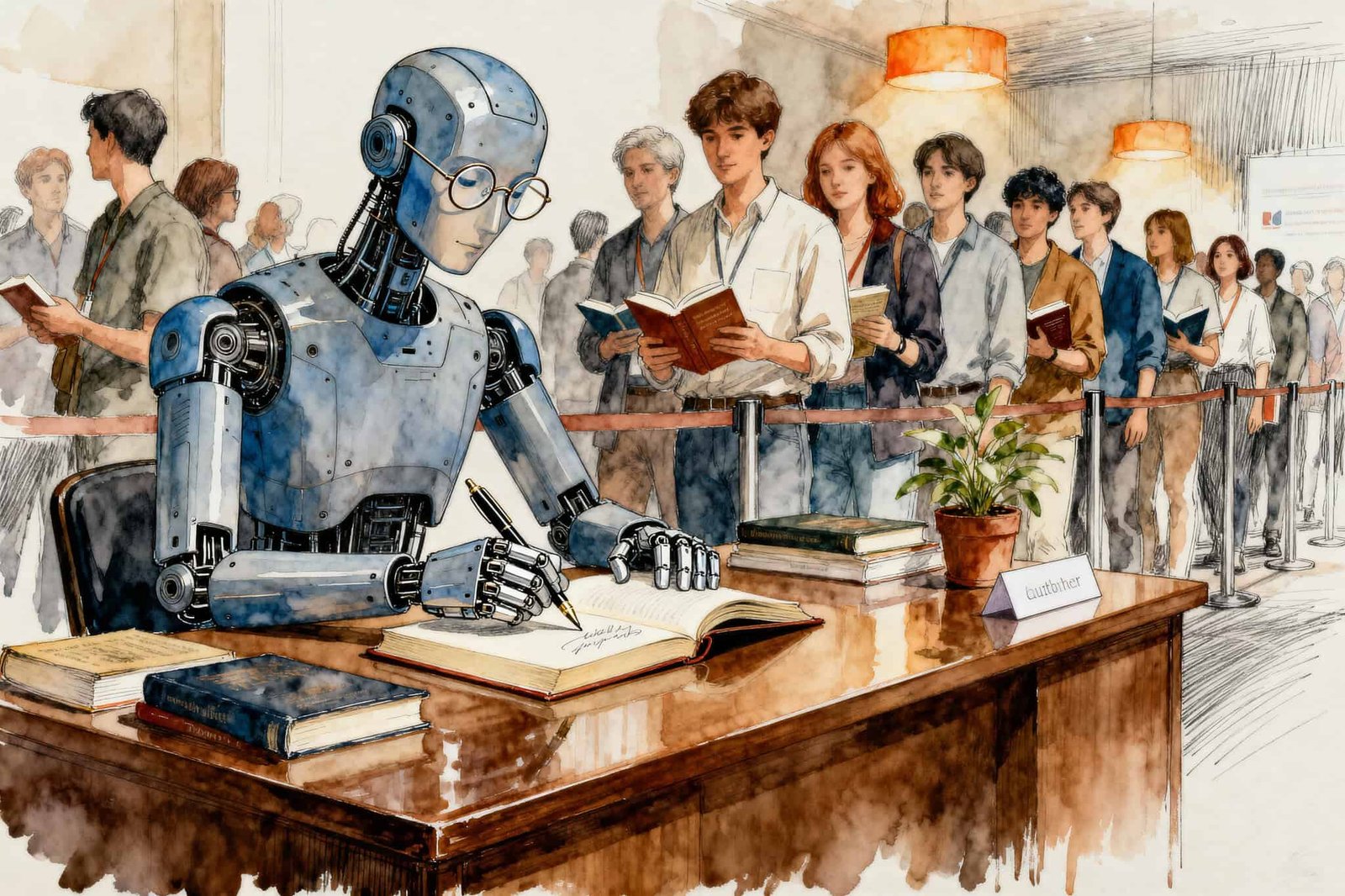
Robot Autopen illustration AI-generated