

Explore our curated selection of Arthur C. Clarke signed first editions, featuring landmark works from one of the most visionary minds in modern science fiction. Clarke’s novels — including Childhood’s End, Rendezvous with Rama, and 2001: A Space Odyssey — are cornerstones of the genre, blending scientific insight with bold imagination. Signed first printings are increasingly sought after for their cultural importance and historical significance. These collectible editions are ideal for readers, collectors, and anyone building a library of influential speculative works that shaped our understanding of the future.

![Product Image: Signed Arthur C Clarke | Hammer of God | 1st HB | [signed bookplate tipped in]](https://i.ebayimg.com/images/g/GxsAAOSwQSlcVz~d/s-l225.jpg)
Signed Arthur C Clarke | Hammer of God | 1st HB | [signed bookplate tipped in]
🇺🇸 Price: US $369.99
Buy It Now
Childhood Ends: The Earliest Writings Of Arthur C. Clarke SIGNED 1st Ed 1996
🇺🇸 Price: US $329.00
Buy It Now
Arthur C Clarke / The Sentinel / Signed Limited Edition / Berkley 1983
🇺🇸 Price: US $220.00
Buy It Now
2010 Odyssey Two Arthur C Clarke Signed Limited 1st Edition #286/650 Phantasia
🇺🇸 Price: US $299.00
Buy It Now


SIGNED x2 Arthur C Clarke & Ray Bradbury 1st Printing First Edition 1992 HCDJ
🇺🇸 Price: US $299.99
Buy It Now
Prelude to Space by ARTHUR C. CLARKE ~ SIGNED First Hardcover Edition 1954 1st
🇺🇸 Price: US $2,000.00
Buy It Now
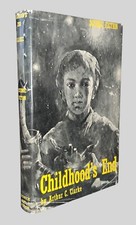
Arthur C. Clarke/Childhood's End SIGNED First UK Edition; NF/VG; Scarce!
🇺🇸 Price: US $3,000.00
Buy It Now
SIGNED 1st/1st Arthur C. Clarke 2010: Odyssey Two HC DJ Del Rey 1982
🇺🇸 Price: US $449.99
Buy It Now

2010: ODYSSEY TWO Arthur C. Clarke SIGNED NUMBERED EDITION Phantasia Press
🇺🇸 Price: US $1,100.00
Buy It Now

Signed By Author is an eBay affiliate. We may earn a commission from qualifying purchases.
About Arthur C. Clarke
Arthur C. Clarke (1917–2008) was one of the defining figures of 20th-century science fiction, renowned for his visionary ideas, scientific accuracy, and profound influence on the genre. Born in Somerset, England, Clarke developed a passion for astronomy early in life, spending his youth constructing telescopes and studying the night sky. After serving in the Royal Air Force during World War II, he earned a degree in physics and mathematics, combining scientific training with a talent for imaginative storytelling.
Clarke’s early short fiction established him as part of a new wave of forward-looking writers who sought to bring scientific rigour into sci-fi genre fiction. His reputation soared with Childhood’s End (1953), a novel exploring transcendence, evolution, and the future of humanity. This was followed by Rendezvous with Rama (1973), which won the Hugo, Nebula, and numerous international awards, confirming Clarke’s place among the genre’s most respected voices.
Perhaps his most famous contribution is 2001: A Space Odyssey, created in collaboration with filmmaker Stanley Kubrick. Released as both a novel and a film in 1968, it remains a milestone in speculative storytelling — simultaneously grounded in scientific possibility and brimming with philosophical mystery. Clarke’s broader body of work combines optimism about technological progress with deep questions about humanity’s place in the cosmos.
Beyond fiction, Clarke was a prolific commentator on space travel and scientific advancement. His concept of geostationary satellites, proposed in 1945, later became the basis for modern communications systems — a rare example of a writer whose speculative idea became global infrastructure.
Collectors value Clarke’s first editions both for their literary significance and for their role in shaping modern visions of space exploration and the future.
Illustration of Arthur C. Clarke based on a photograph by Mamyjomarash (Amy Marash), Public domain, via Wikimedia Commons.
