
Isaac Asimov signed first editions are among the most desirable modern collectibles, combining literary importance with lasting cultural influence. Landmark works such as Foundation and I, Robot helped define the intellectual direction of 20th-century speculative writing and continue to attract new readers through film and television adaptations.
With multiple Hugo and Nebula Awards to his name, Asimov’s status as a foundational figure makes authenticated copies especially appealing to serious collectors. Demand remains strong for early printings, particularly those connected to the original Foundation trilogy and his groundbreaking robotics stories.
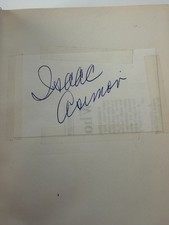

Isaac Asimov Signed THE GODS THEMSELVES HC DJ 1st Ed BCE Doubleday 1972
🇺🇸 Price: US $220.00
Buy It Now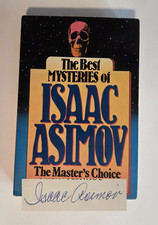

SIGNED Foundation and Earth by Isaac Asimov (1986) HC.DJ. 1st. Isaac Asimov
🇺🇸 Price: US $275.00
Buy It Now
Isaac Asimov the Robots of Dawn 1st Edition, Dust Jacket, SIGNED, Numbered
🇺🇸 Price: US $300.00
Buy It Now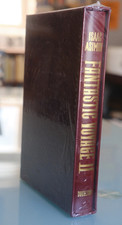
Isaac Asimov / Fantastic Voyage II Signed 1st Edition Slipcase Sealed 1987
🇺🇸 Price: US $250.00
Buy It Now

Isaac Asimov The Robots of Dawn (1983) 1st Edition Signed Hardcover Slipcover
🇺🇸 Price: US $425.00
Buy It Now
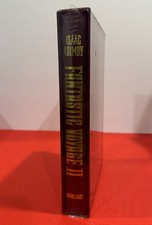
Fantastic Voyage II Isaac Asimov Signed Limited First Edition SEALED
🇺🇸 Price: US $299.95
Buy It Now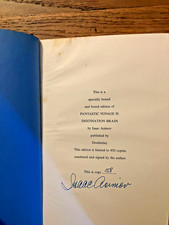
Isaac Asimov / Fantastic Voyage II Destination Brain Signed 1st Edition 1987
🇺🇸 Price: US $300.00
Buy It Now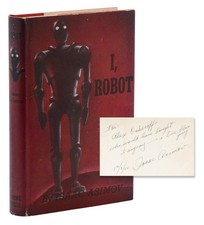
I, Robot ~ SIGNED by ISAAC ASIMOV ~ Presentation Copy, First Edition ~ 1st 1950
🇺🇸 Price: US $45,000.00
Buy It Now

Asimov's Annotated Gilbert & Sullivan Signed by Isaac Asimov 1st Ed, 2nd Print
🇺🇸 Price: US $149.95
Buy It Now
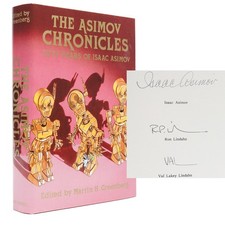

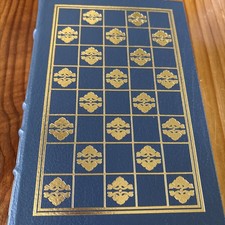
Prelude to Foundation by Isaac Asimov, Easton Press 1988, 1st edition signed
🇺🇸 Price: US $450.00
Buy It NowSigned By Author is an eBay affiliate. We may earn a commission from qualifying purchases.
About Isaac Asimov
Isaac Asimov was one of the most influential and prolific writers of the 20th century, a rare figure whose work shaped both popular culture and serious scientific thought. Born in 1920 in Petrovichi, then part of the Russian Soviet Federative Socialist Republic, Asimov emigrated to the United States as a child and grew up in Brooklyn. He trained as a biochemist, earning a PhD from Columbia University, but it was writing that became his life’s work.
Asimov’s early short stories quickly established him as a major new voice in science fiction, particularly through his exploration of robotics and artificial intelligence. His famous Three Laws of Robotics, first articulated in the short story collection I, Robot, became a foundational concept for generations of writers, filmmakers, and technologists. These stories stood out not for action or spectacle, but for their logical puzzles and ethical depth.
His reputation was cemented with the publication of the Foundation series, beginning with Foundation in 1951. Inspired in part by Edward Gibbon’s The History of the Decline and Fall of the Roman Empire, the series explored the rise and fall of civilizations through the lens of “psychohistory”, a fictional science that predicts mass human behaviour. The scope and ambition of the series made it a cornerstone of modern speculative literature.
Beyond fiction, Asimov was an extraordinary populariser of science. He wrote hundreds of essays and books on subjects ranging from chemistry and physics to history, Shakespeare, and the Bible. His nonfiction work was marked by clarity, wit, and an infectious enthusiasm for knowledge, earning him a loyal readership far beyond genre boundaries.
Asimov received numerous honours during his lifetime, including multiple Hugo and Nebula Awards. In 1966, the Foundation trilogy was given a special Hugo Award for “Best All-Time Series”, a rare recognition of its lasting influence. Late in life, his standing as a cultural figure only grew, as his ideas about technology, ethics, and the future proved increasingly prescient.
Film and television adaptations have also contributed to Asimov’s enduring popularity. I, Robot was adapted into a major Hollywood film in 2004, while Foundation reached a new global audience through a high-profile television adaptation decades after its original publication. These adaptations have introduced his work to new generations of readers and collectors alike.
Isaac Asimov died in 1992, leaving behind an unmatched body of work that continues to shape how we imagine the future. His books remain widely read, widely discussed, and increasingly sought after in collectible form.
Illustration of Isaac Asimov based on a photograph by Phillip Leonian from New York World-Telegram & Sun., Public domain, via Wikimedia Commons
