Celia Fremlin signed and first editions are among the more quietly sought-after items in the British crime fiction collecting market. Often compared to Patricia Highsmith for her psychological precision, Fremlin is an author whose critical stock has risen considerably in recent years and whose original first editions remain genuinely scarce. Her Edgar Award-winning debut The Hours Before Dawn (1958) and the classic seaside thriller Uncle Paul (1959) are particularly desirable, and early copies in good condition with dust jackets command serious attention. As her readership grows with each new reissue and critical reassessment, the collectibility of her early work only strengthens. For collectors with an eye on both quality and long-term investment, Fremlin is a name very much worth knowing.
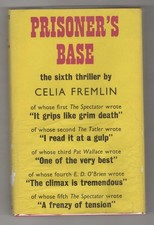


VINTAGE 1958 BOOK CLUB EDITION THE HOURS BEFORE DAWN CELIA FREMLIN ab6
🇺🇸 Price: US $9.76
Buy It Now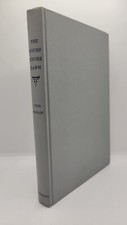
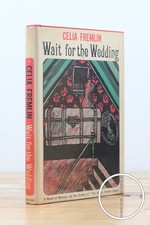

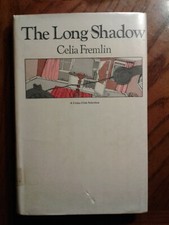

The Trouble-Makers by Celia Fremlin (First Edition) Gollancz File Copy
🇺🇸 Price: US $65.00
Buy It Now

1958 Lippincott - The Hours Before Dawn by Celia Fremlin - 1st Edition
🇺🇸 Price: US $13.99
Buy It Now


Ellery Queen's Scenes of the Crime, 1977, Hardcover, Davis, Dust Jacket
🇺🇸 Price: US $13.99
Buy It Now
Signed By Author is an eBay affiliate. We may earn a commission from qualifying purchases.
About Celia Fremlin
Born in Kent in 1914 and raised in Hertfordshire, Celia Fremlin was a woman of considerable contradictions – Classics-educated at Somerville College, Oxford, yet drawn to the rough edges of working life. In her early twenties, already caught up in the political currents of the 1930s, she took work as a charwoman partly out of ideological curiosity, partly out of a genuine desire to understand lives very different from her own. That early instinct to get under the skin of things would eventually define her writing.
During the Second World War she served as an air-raid warden in London before being recruited to the Mass Observation Project, the government-backed social anthropology effort documenting how ordinary people were living through extraordinary times. Her fieldwork at a Gloucestershire radar factory became War Factory (1943), a quietly devastating portrait of women’s working lives and the class tensions that even a world war couldn’t dissolve. It remains a remarkable piece of social reportage.
She married Elia Goller in 1942, settled in Hampstead, and had three children. It was the sleeplessness of new motherhood — and the particular psychological weight of it — that gave her first novel its subject. The Hours Before Dawn, published in 1958, follows an exhausted young mother whose grip on reality begins to feel uncertain. It won the Edgar Award from the Mystery Writers of America in 1960, one of crime fiction’s most respected honours, and it remains her most celebrated work. The book was something genuinely new: domestic life rendered as psychological threat, the home as a place where fear could quietly take root.
A year later came Uncle Paul (1959), a tension-filled seaside noir in which a family holiday becomes something far more unsettling. Again, Fremlin worked the same essential territory – the ordinary, the domestic, the quietly horrifying – and again she pulled it off with remarkable control. These two books alone would secure her a lasting reputation in crime & thrillers, but she kept writing prolifically across four decades, producing sixteen novels in total, alongside a book of poetry and three short story collections.
Her personal life carried its own weight of tragedy. In 1968, her youngest daughter died by suicide at nineteen; her husband took his own life a month later. Fremlin spent time in Geneva before returning to England, and she continued to write. In 1985 she married Leslie Minchin, with whom she lived until his death in 1999.
For many years Fremlin occupied a curious place in literary culture; she was admired by devoted readers and genre insiders, yet never quite as famous as her talent warranted. That began to change in the years following her death in 2009, as a wave of reissues – most notably through Faber & Faber – brought her to a generation of new readers. Crime writers of the stature of Val McDermid, Ian Rankin, and Elly Griffiths have spoken of their admiration for her. The Sunday Times has described her as Britain’s equivalent to Patricia Highsmith, a comparison that speaks to both her psychological precision and her cool detachment from the chaos she creates on the page.
What marks Fremlin out, in the end, is the specificity of her unease. Other writers put their characters in extraordinary danger. Fremlin put hers at the kitchen table, in the spare bedroom, at the beach on a summer holiday – and made those places feel like the most dangerous rooms in the world. She understood that for many women, the domestic sphere was precisely where the threat resided, and she wrote about it with intelligence, wit, and an unflinching eye.
She died in 2009, just days before her ninety-fifth birthday. Her reputation has only grown since.
AI-generated illustration for editorial purposes; no endorsement implied.