

Ian Rankin signed first editions are among the most collected items in British crime fiction, and with good reason. A knighted author, CWA Diamond Dagger recipient, and Edgar Award winner, Rankin occupies a position at the very top of the genre, with a readership to match. First editions of Black and Blue (1997), the Gold Dagger winner that broke him internationally, and the early Rebus novels are particularly sought after, and fine copies with dust jackets are becoming harder to find. With the BBC’s acclaimed Rebus reboot drawing new audiences to the books, interest in his work shows no sign of cooling. For collectors with an eye on enduring value, Rankin is one of the soundest names in the market.
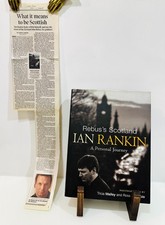
Ian Rankin SIGNED First Edition Rebus’s Scotland HC 2005 A Personal Journey
🇺🇸 Price: US $250.23
Buy It Now
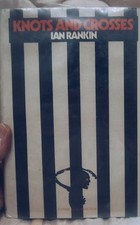
Rare Ian Rankin / Knots and Crosses 1st Edition 1987 1st Rebus mystery signed
🇺🇸 Price: US $120.00
Buy It Now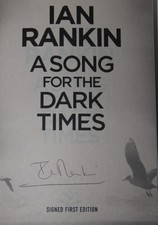


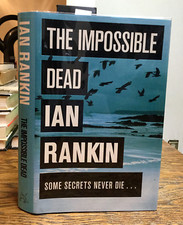

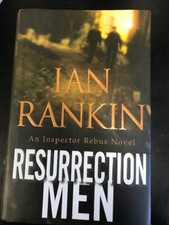


The Complaints By Ian Rankin Signed 2009 First Edition, First Printing
🇺🇸 Price: US $21.99
Buy It Now


Signed By Author is an eBay affiliate. We may earn a commission from qualifying purchases.
About Ian Rankin
Sir Ian Rankin was born in 1960 in Cardenden, a small coal-mining town in Fife, and was the first in his family to go to university. He studied English literature at the University of Edinburgh, and it was there, nominally working towards a PhD in Scottish literature, that he began writing the novels that would eventually make him one of the most widely read authors in Britain. He never finished the doctorate. He didn’t need to.
Before his books took off, Rankin’s CV was an eccentric document, including stints as a grape-picker, swineherd, taxman, and hi-fi journalist. His first novel, The Flood, appeared in 1986. A year later came Knots and Crosses, the book that introduced Detective Inspector John Rebus of the Edinburgh police, a stubbornly flawed, whisky-drinking, rock-obsessed cop working the harder edges of a city that tends to hide its darker half behind its Georgian facades. Rankin initially resisted being labelled a crime writer. He came to accept it.
The Rebus novels grew in ambition and readership through the late 1980s and 1990s. The turning point came with Black and Blue in 1997, a dense, unsettling book that connected a fictional murder investigation to the real-life unsolved Bible John case. It won the Crime Writers’ Association Gold Dagger for Fiction, became his first international bestseller, and brought the entire Rebus backlist into demand practically overnight. The series, now spanning more than twenty diamondnovels and sitting firmly within crime & thrillers, has sold upwards of thirty-five million copies and been translated into thirty-six languages.
The awards followed in number. Rankin holds the CWA Diamond Dagger, the Crime Writers’ Association’s lifetime achievement honour, awarded in 2005. He won the Mystery Writers of America Edgar Award for Resurrection Men in 2004, and has picked up Gold Daggers, French and German crime prizes, and a Raymond Chandler Fulbright fellowship along the way. He was made an OBE in 2002 for services to literature, and received a knighthood in 2022. He is a Fellow of the Royal Society of Edinburgh, a Fellow of the Royal Society of Literature, and the first recipient of the Edinburgh Award in 2009, given for outstanding contribution to the city’s cultural life.
The television adaptations have kept pace with the books. Rebus ran on ITV from 2000 to 2007, with John Hannah and then Ken Stott playing the inspector across four series. In 2024 a new adaptation arrived on BBC One, with Richard Rankin in the lead role, reimagining Rebus as a younger detective sergeant in contemporary Edinburgh. The series attracted strong reviews and healthy audiences, and a second series was commissioned in 2025. Each new iteration of Rebus on screen brings fresh readers to the original novels, and the cycle shows no sign of slowing.
Rankin’s Edinburgh is as much a character as Rebus himself: the New Town and the housing schemes, the pubs and the politics, the institutional Scotland that presents one face to the world and nurses quite another in private. He has said that his aim was always to write, on the surface, a crime novel that would sell, but one that would also be taken seriously as fiction. He managed both. His archive of manuscripts and correspondence now sits in the National Library of Scotland, which tells you something about how the literary establishment eventually came to view what he had been doing all along.
Now in his sixties, Rankin continues to write and remains one of the most visible figures in British crime fiction. His profile, already considerable, has only grown with the renewed television attention, and his standing both as a popular novelist and a serious literary presence seems, at this point, entirely secure.
Illustration of Ian Rankin based on a photograph by TimDuncan, CC BY 3.0, via Wikimedia Commons.
