Robert Macfarlane signed first editions are among the most sought-after items in contemporary British literary non-fiction, and their collectibility has grown steadily with his reputation. Winner of the Guardian First Book Award, the Wainwright Prize, and the E.M. Forster Award, Macfarlane is an author whose standing only strengthens with each new book. First editions of Mountains of the Mind (2003) and Underland (2019) attract particular collector interest, and his latest, Is a River Alive? (2025), a number one Sunday Times bestseller, is already drawing attention as a future collectable. His audience spans literary readers, naturalists, and conservationists, which keeps demand broad and consistent. For collectors with an eye on long-term value, Robert Macfarlane signed first editions represent a well-grounded investment in one of the most admired writers currently at work.


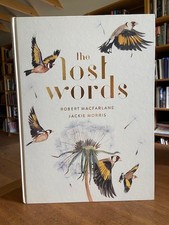
Signed Robert Macfarlane & Jackie Morris The Book Of Birds US First/First
🇺🇸 Price: US $94.49
Buy It Now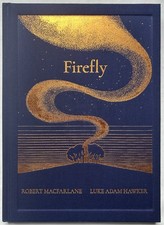
Firefly by Robert Macfarlane, Luke Adam Hawker SIGNED x 2 FIRST EDITION
🇺🇸 Price: US $49.99
Buy It Now


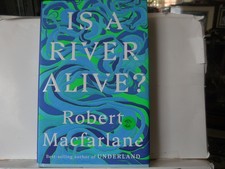
SIGNED ~ IS A RIVER ALIVE? by Robert Macfarlane (2025, Hardcover) 1st/1st
🇺🇸 Price: US $60.00
Buy It Now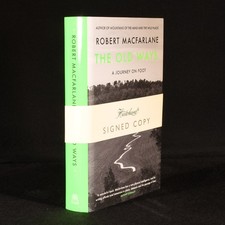
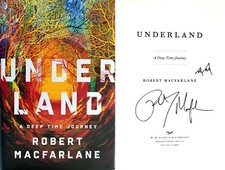
Robert Macfarlane~SIGNED & DOODLED IN PERSON~Underland~1st/1st + Photos!
🇺🇸 Price: US $98.95
Buy It Now



Signed By Author is an eBay affiliate. We may earn a commission from qualifying purchases.
About Robert Macfarlane
Robert Macfarlane was born in Nottingham in 1976 and grew up in a family where mountains and wild places were taken seriously. His grandfather was Sir Edward Heywood Peck (1915–2009), a prominent British diplomat, mountaineer, and author, and that inheritance – part physical, part literary – has shaped everything Macfarlane has written since. He read English at Magdalen College, Oxford, then went to Cambridge for his doctorate, and has been a Fellow of Emmanuel College, Cambridge since 2002. It is from that relatively quiet institutional base that he has produced one of the most distinctive bodies of writing in contemporary British letters.
His first book, Mountains of the Mind, appeared in 2003. Ostensibly a history of how Europeans came to love mountains, and to risk their lives on them, it was also something more personal: a meditation on obsession, beauty, and the strange pull of dangerous places. It won the Guardian First Book Award and the Sunday Times Young Writer of the Year Award, and announced Macfarlane as a writer to follow closely. He was twenty-six when it was accepted for publication.
The Wild Places followed in 2007, tracing a series of journeys to the remote and the overlooked corners of Britain and Ireland, and asking, quietly but urgently, what wildness might still mean in a managed, crowded landscape. Then came The Old Ways (2012), a book about paths and pilgrimages and the deep human habit of following lines across the earth, which became his first real bestseller. By this point Macfarlane had established a way of working that was entirely his own: rigorous research, genuine physical engagement with the landscapes he describes, and prose of a quality that made literary critics sit up and pay attention even when they’d never thought to read about rivers or ridge lines.
Landmarks (2015) took a different approach, gathering a glossary of rare and regional words for landscape and weather and the natural world, and weaving them into an argument about language, attention, and what we lose when we stop finding words for things. It became one of those books that people pressed on friends, that appeared on school reading lists, that teachers cited when trying to explain what good nature writing might look like. The book sits squarely within natural history & conservation, but it wears that lightly, arriving at its concerns through literature and linguistics as much as ecology.
Underland (2019) is perhaps his most ambitious work to that point, a descent into the underground worlds beneath our feet, from Cumbrian caves to Slovenian karst to the Anthropocene’s buried archive of nuclear waste. It won the Wainwright Prize for Writing on Conservation and the Handover Prize for Non-Fiction, and confirmed what his readers already suspected: that Macfarlane was not simply a nature writer but a writer of ideas, using landscape as a way of thinking about time, memory, and human consequence.
His latest book, Is a River Alive? (2025), published by Hamish Hamilton in the UK, takes him across three continents, to the cloud-forests of Ecuador, the polluted waterways of Chennai, and the wild rivers of northeastern Canada, asking whether rivers might be recognised in law and imagination as living beings. It became a number one Sunday Times bestseller and a New York Times bestseller, and was named among the best books of 2025 by the New Yorker, the Economist, and the Guardian, among others. It is the work of a writer who has moved from lyrical observation towards something more urgent and, in the current climate, more necessary.
The awards have accumulated steadily. He has received the E.M. Forster Award from the American Academy of Arts and Letters, the Henry David Thoreau Prize for Literary Excellence, and the Boardman Tasker Prize, among others. He collaborated with the artist Stanley Donwood and the musician Jonny Greenwood of Radiohead on various projects, a cross-disciplinary reach that speaks to how widely his work travels. His children’s books, written with the illustrator Jackie Morris, including The Lost Words (2017) and The Lost Spells (2020), became cultural phenomena in their own right, inspiring community murals, orchestral commissions, and a touring exhibition.
Several of his books have been adapted for documentary television, most notably Underland, and he has written films narrated by Willem Dafoe. His profile in those media, combined with the considerable reach of his latest book, has kept his name in front of audiences well beyond the usual literary readership.
What makes Macfarlane unusual, in the end, is not just the quality of the prose, though that is considerable. It is the seriousness of the thinking beneath it. He writes about mountains and rivers and footpaths, but he is also writing about how we pay attention, what we owe to the non-human world, and what literature can actually do in the face of ecological crisis. He has become one of the defining voices of a moment in which those questions feel increasingly urgent, and he arrived at that position not through polemic but through patience, scholarship, and a very quiet authority.
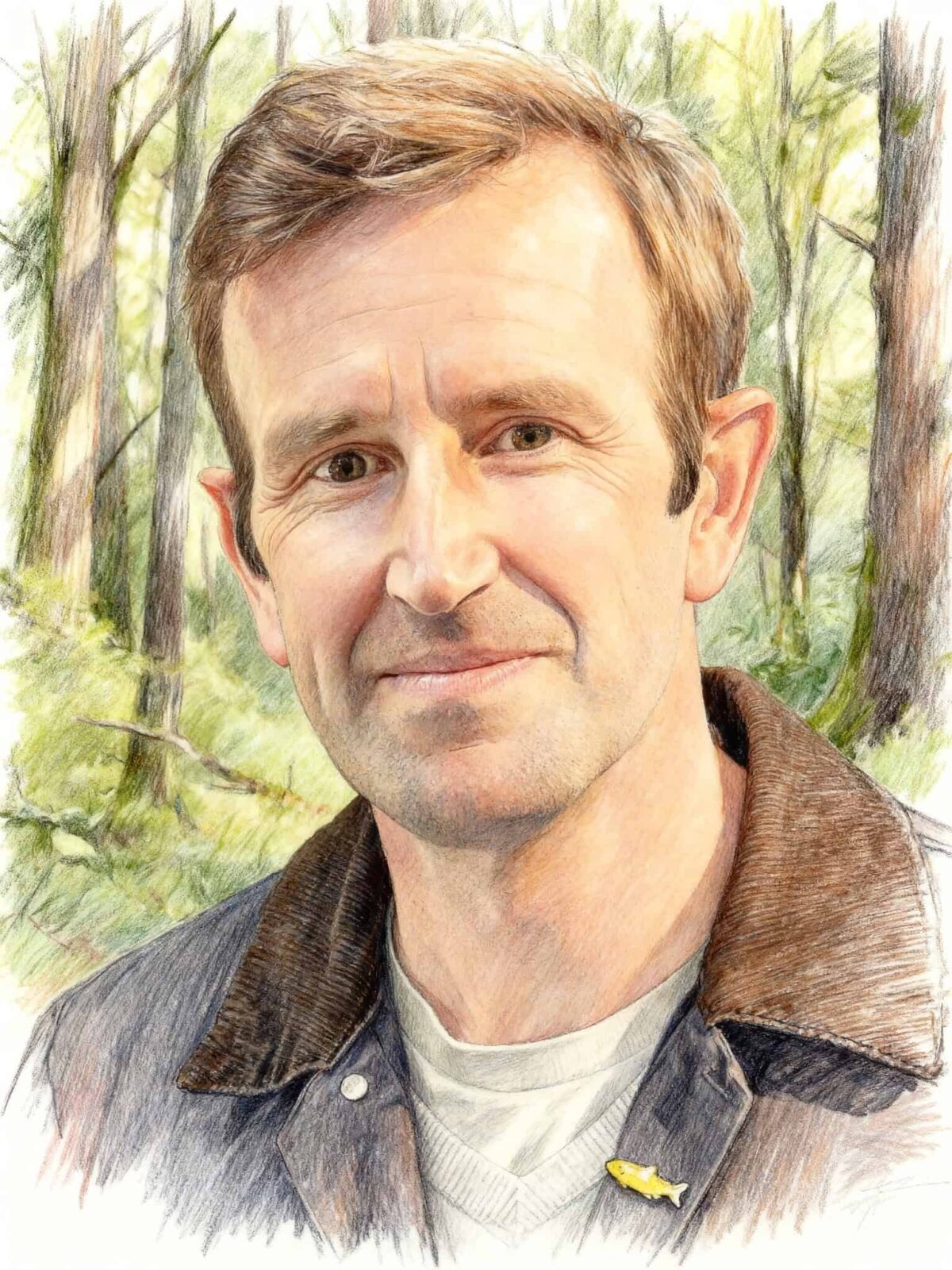
Illustration of Robert Macfarlane based on a photograph by Amy Martin Photography, CC BY-SA 4.0, via Wikimedia Commons.
.jpg)