Yaa Gyasi signed first editions are among the most compelling additions to the contemporary literary collecting market, and her trajectory suggests the interest will only grow. Winner of the National Book Critics Circle Award, the PEN/Hemingway Award, and the American Book Award, Gyasi announced herself with one of the most acclaimed debuts in recent memory. Homegoing (2016), her multigenerational historical fiction spanning three centuries of Ghanaian and African-American history, is the title that commands most collector attention, and true first editions are already becoming hard to find in fine condition. Her second novel Transcendent Kingdom (2020), a Women’s Prize shortlistee and New York Times bestseller, reinforces a reputation that shows no sign of plateauing. For collectors with an eye on long-term literary value, Yaa Gyasi signed first editions are essential for any serious collection.


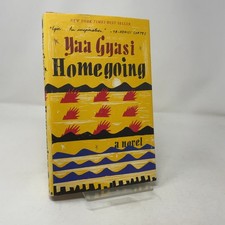


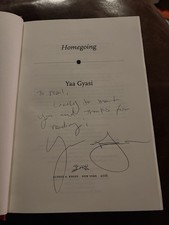


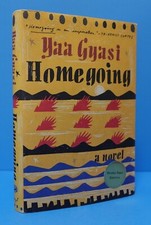
Signed First Edition: Homegoing by Yaa Gyasi (Powell’s Indiespensable Vol. 59)
🇺🇸 Price: US $100.00
Buy It Now


Signed By Author is an eBay affiliate. We may earn a commission from qualifying purchases.
About Yaa Gyasi
Yaa Gyasi was born in Mampong, Ghana, in 1989. Her family moved to the United States when she was two years old, settling first in Ohio while her father completed his doctorate, then moving through Illinois and Tennessee before putting down roots in Huntsville, Alabama, where Gyasi grew up. It is an unlikely biographical arc for a writer who would eventually produce one of the most celebrated debuts in recent American literary history, but Huntsville matters, its particular experience of the American South, its racial history and its legacy, feeds directly into the fiction. She read English at Stanford, then took her MFA at the Iowa Writers’ Workshop, where she held a Dean’s Graduate Research Fellowship.
The seed of her first novel was planted in 2009, when Gyasi travelled to Ghana on a research grant and visited Cape Coast Castle, one of the fortified slave ports on the West African coast where captured Africans were held before being shipped across the Atlantic. There she learned a detail that stayed with her: the British soldiers who worked in the castle sometimes married local women, even while others like them were held captive in the dungeons below. That image of two women, one above, one below, separated by a floor and by the entire weight of history, became the structural and moral engine of Homegoing.
Published in 2016, Homegoing follows two half-sisters born in eighteenth-century Ghana whose descendants’ lives are traced across seven generations, moving between West Africa and the United States, from the slave trade through colonialism, the Great Migration, and into the present day. It is a novel of extraordinary scope and emotional precision, and it announced Gyasi as a writer of uncommon gifts. She won the National Book Critics Circle’s John Leonard Prize for Best First Book, the PEN/Hemingway Award for Debut Novel, the American Book Award, and the Vilcek Prize for Creative Promise in Literature. In 2019 the BBC selected it as one of the 100 Novels that Shaped Our World. She was twenty-six when it was accepted for publication, and had negotiated a seven-figure advance from Knopf after multiple competing offers.
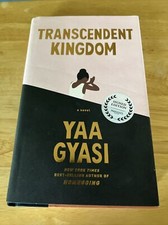
Her second novel, Transcendent Kingdom (2020), was shortlisted for the Women’s Prize for Fiction and became a New York Times bestseller. A quieter, more interior book than Homegoing, it follows a Ghanaian-American neuroscience PhD student at Stanford trying to understand the opioid addiction that destroyed her brother and the depression that has flattened her mother, while her own faith quietly unravels. It is a novel about science and religion, grief and inheritance, and it demonstrated that Homegoing was no fluke.
In 2017 she was selected as one of Granta’s Best of Young American Novelists, a list that places her in very good company. Her work sits firmly within historical fiction in its scope and ambition, but it carries the urgency of the present in every line, asking what the past has made of us and what, if anything, we might do about it. She is one of the most significant voices to have emerged in literary fiction in the last decade, and her reputation is still building.
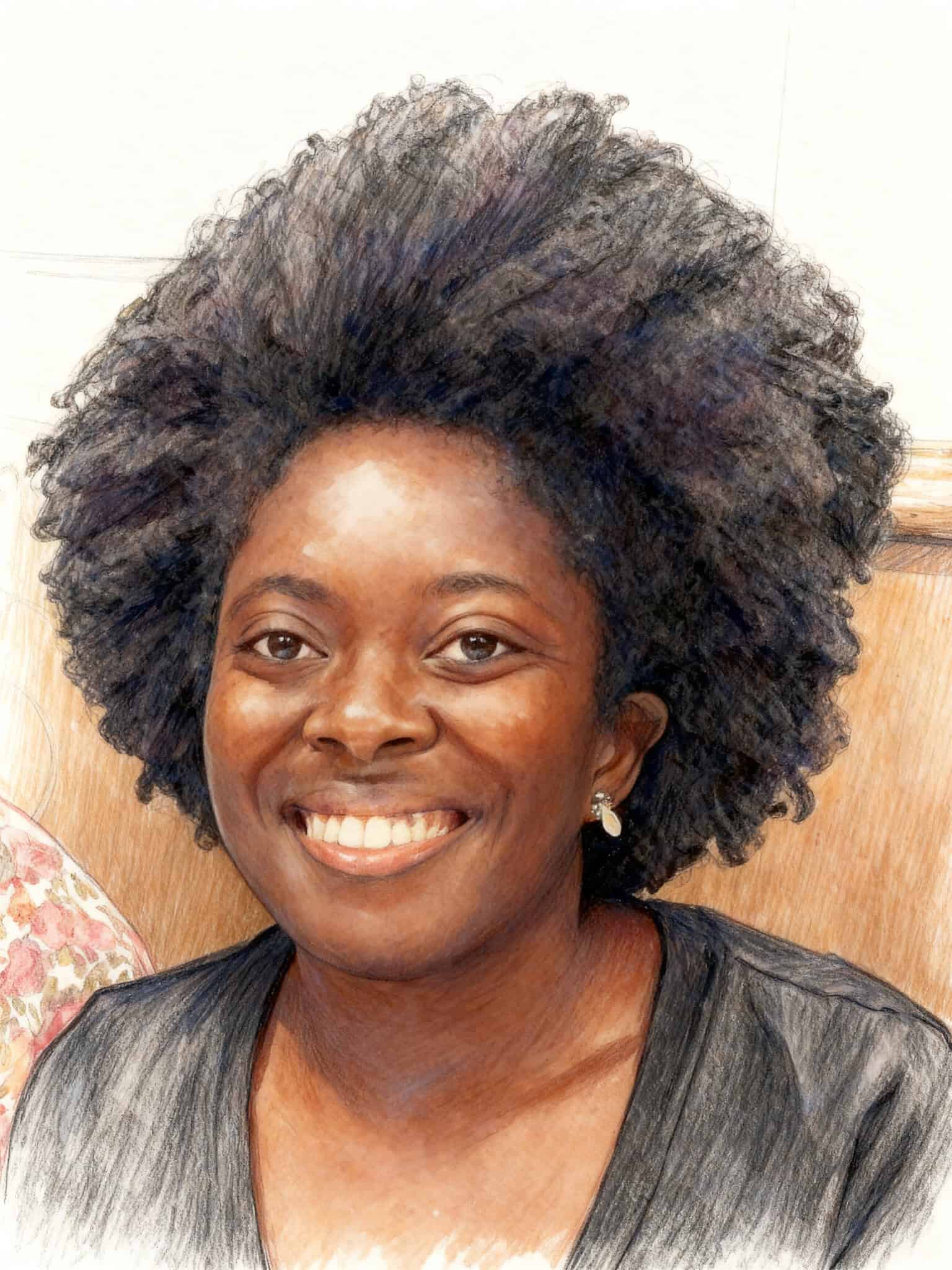
Illustration of Yaa Gyasi based on a photograph by Bank Square Books, CC BY 2.0, via Wikimedia Commons.
_(cropped).jpg)