Terry Pratchett signed first editions are among the most consistently sought-after items in British fantasy collecting. The Colour of Magic (1983), the novel that launched Discworld, is the obvious target: first edition copies in fine condition with dust jackets are now genuinely scarce, and prices have risen steadily since his death in 2015. The Shepherd’s Crown, his final Discworld novel, carries its own particular weight for collectors. A knighted author, Carnegie Medal winner, and the UK’s bestselling author of the 1990s, Pratchett’s cultural standing is beyond question. With the Good Omens finale landing on Prime Video in May 2026, interest in his back catalogue shows no sign of cooling. Terry Pratchett signed first editions are a well-grounded long-term investment.


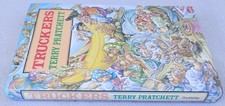
TRUCKERS TERRY PRATCHETT SIGNED FIRST EDITION 1989 HARDBACK DUSTWRAPPER BOOK
🇺🇸 Price: US $106.81
Buy It Now
Terry Pratchett 2001 Signed First Edition Thief Of Time Hardback Discworld
🇺🇸 Price: US $133.59
Buy It Now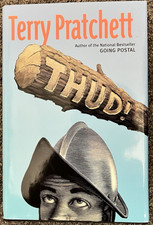


SIGNED - Terry Pratchett = WINTERSMITH = hardcover Harper 1st/1st 2006 SIGNED
🇺🇸 Price: US $129.95
Buy It Now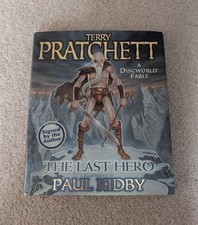


2001 Signed First Unseen Library Edition Terry Pratchett Equal Rites
🇺🇸 Price: US $200.05
Buy It Now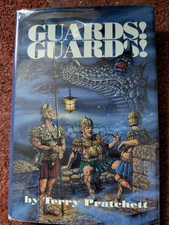
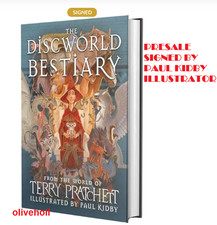
Signed Paul Kidby The Discworld Bestiary UK First PRESALE Terry Pratchett
🇺🇸 Price: US $119.00
Buy It Now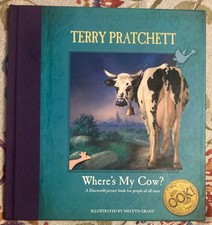
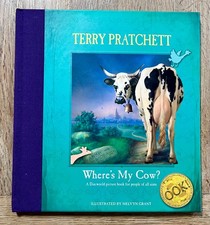
Terry Pratchett SIGNED Where's My Cow? Discworld Hardcover First US Edition
🇺🇸 Price: US $200.00
Buy It Now
Terry Pratchett THE WEE FREE MEN Signed 1st/1st 2003 UK Hardback Discworld
🇺🇸 Price: US $157.64
Buy It Now
Signed By Author is an eBay affiliate. We may earn a commission from qualifying purchases.
About Terry Pratchett
Terry Pratchett was born in Beaconsfield, Buckinghamshire, in 1948, the son of an engineer and a secretary. He published his first story in a school magazine at thirteen, left school at seventeen to become a journalist, and never really stopped writing. His debut novel, The Carpet People, came out in 1971, when he was still in his early twenties and working as a press officer. It announced an imagination that didn’t fit neatly into any existing category, and the work that followed would prove the point emphatically.
The first Discworld novel, The Colour of Magic, appeared in 1983. It introduced a flat world balanced on the backs of four elephants, themselves standing on a giant turtle drifting through space, and with it came a cast of characters, a city called Ankh-Morpork, and a comic sensibility sharp enough to cut. What started as a parody of the fantasy genre quietly became something more: a sustained satirical project that used the conventions of fantasy to examine class, politics, religion, death, and the nature of narrative itself. Pratchett kept writing at a pace that astonished his publishers, producing one or two Discworld novels a year across three decades, forty-one in total, and the series never really lost its edge.
The awards came steadily. He was appointed OBE in 1998 and received a knighthood in 2009 for services to literature. He won the Carnegie Medal, one of children’s literature’s most respected honours, for The Amazing Maurice and His Educated Rodents in 2001. His work in fantasy earned him the Locus Award multiple times, and in 2003 he joined Dickens as one of only two authors with five books in the BBC’s Big Read top hundred. By the 1990s he was the UK’s bestselling author, a position that surprised exactly no one who had been paying attention.
Night Watch (2002) is perhaps the novel that best illustrates what Pratchett was doing beneath the jokes. A time-travel story set during a revolutionary uprising in Ankh-Morpork, it is genuinely moving, politically serious, and one of the finest things he wrote. Readers who come to it expecting a comic novel and find themselves unexpectedly affected tend to remember it for years.
In 2007 he was diagnosed with a rare form of early-onset Alzheimer’s, a fact he made public immediately, donating a million dollars to Alzheimer’s research and spending the years that followed as a forceful advocate for greater awareness of the disease and for the right to an assisted death. He presented a BAFTA-winning BBC documentary on the subject in 2011. He continued writing throughout, and finished his final Discworld novel, The Shepherd’s Crown, a few months before his death in March 2015, at sixty-six. True to form, he had arranged for his unfinished works to be destroyed after he died, his hard drive run through a steamroller. The archive ends where he decided it would.
His total book sales exceed one hundred million copies worldwide, in forty languages, and his readership spans generations in a way that few authors of any genre achieve. The Good Omens adaptation, based on the 1990 novel he co-authored and currently concluding its run on Prime Video in 2026, has introduced his work to a new generation of viewers finding their way back to the original books and, from there, to Discworld.
AI-generated illustration for editorial purposes; no endorsement implied.