Signed Jeanette Winterson first editions occupy a distinctive corner of the literary fiction collecting market. A Whitbread Prize winner, CBE, and Fellow of the Royal Society of Literature, Winterson is one of the most consistently inventive British novelists of the past four decades, with a readership that has only grown as her concerns, identity, the body, technology, and the nature of love, have moved closer to the centre of cultural conversation. Early editions of Oranges Are Not the Only Fruit (1985) and The Passion (1987) are the prime targets for collectors, and fine copies are becoming steadily harder to find. For anyone building a serious collection in contemporary British fiction, Jeanette Winterson signed first editions are a name every collector should know.


Signed Jeanette Winterson The World and Other Places 1st Edition US 1998 HC/DJ
🇺🇸 Price: US $125.00
Buy It Now





One Aladdin Two Lamps By Jeanette Winterson 1st Ed. HC/DJ SIGNED 2026
🇺🇸 Price: US $24.99
Buy It Now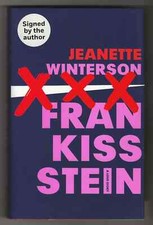


Art Objects - Signed by Jeanette Winterson - First UK Edition Hardcover
🇺🇸 Price: US $40.00
Buy It Now


☆SIGNED☆THE GAP OF TIME by JEANETTE WINTERSON - HOGARTH 2015~FIRST EDITION
🇺🇸 Price: US $18.62
Buy It NowSigned By Author is an eBay affiliate. We may earn a commission from qualifying purchases.
About Jeanette Winterson CBE
Jeanette Winterson was born in Manchester in August 1959 and adopted as an infant by a Pentecostal couple who raised her in Accrington, Lancashire. It was a household of fierce religiosity and very few books, and those two facts together probably explain more about her than anything else. The six books in the house included the Bible and Malory’s Morte d’Arthur, and it was the latter, read by torchlight in the outside toilet, that first opened something up in her. She left home at sixteen after her adoptive mother discovered she was in a relationship with a girl, worked a series of odd jobs, and read English at St Catherine’s College, Oxford. She was twenty-five when her first novel was published.
Oranges Are Not the Only Fruit (1985) drew on the world she had come from: a young woman growing up in an evangelical community, slowly understanding who she is and what the consequences will be. Semi-autobiographical in material but entirely literary in its construction, it won the Whitbread Prize for Best First Novel and was later adapted by Winterson herself into a BBC television serial, which won a BAFTA for best drama and brought her work to a much wider audience. It remains the book most readers encounter first, though it is in some ways the most straightforward thing she has written.
The novels that followed moved further into territory she was mapping almost alone in British literary fiction: The Passion (1987), set in Napoleonic Europe and Venice, won the John Llewellyn Rhys Prize; Sexing the Cherry (1989), a baroque and exhilarating novel playing with history and the body, won the E.M. Forster Award from the American Academy of Arts and Letters. Written on the Body (1992), which refuses to identify the narrator’s gender throughout, became one of the defining texts of postwar queer literature according to the New York Times. Each book proposed that fiction could do something different from what it had been asked to do before.
Winterson’s range is considerable and her output has never quite settled into a single mode. She has written historical fiction, science fiction, ghost stories, memoir, essays on artificial intelligence, and children’s books. Why Be Happy When You Could Be Normal? (2011), her memoir, revisited the world of Oranges with greater candour and greater pain, and became an international bestseller. Frankissstein: A Love Story (2019), reworking Mary Shelley’s Frankenstein through the lens of AI and gender, was longlisted for the Booker Prize. The breadth of her preoccupations, from queer identity and the instability of the body to technology and consciousness, has kept her work feeling current across four decades.
The awards accumulated steadily: alongside the Whitbread, the John Llewellyn Rhys, and the E.M. Forster, she has received two Lambda Literary Awards and the St Louis Literary Award. She was appointed OBE in 2006 and CBE in 2018, both for services to literature, and is a Fellow of the Royal Society of Literature. She has been Professor of Creative Writing at the University of Manchester since 2012.
She lives between Oxfordshire and Spitalfields in London, writes a Substack, and continues to produce work that resists easy description. That restlessness is part of what makes her interesting, and part of what makes early editions of her books worth paying attention to.
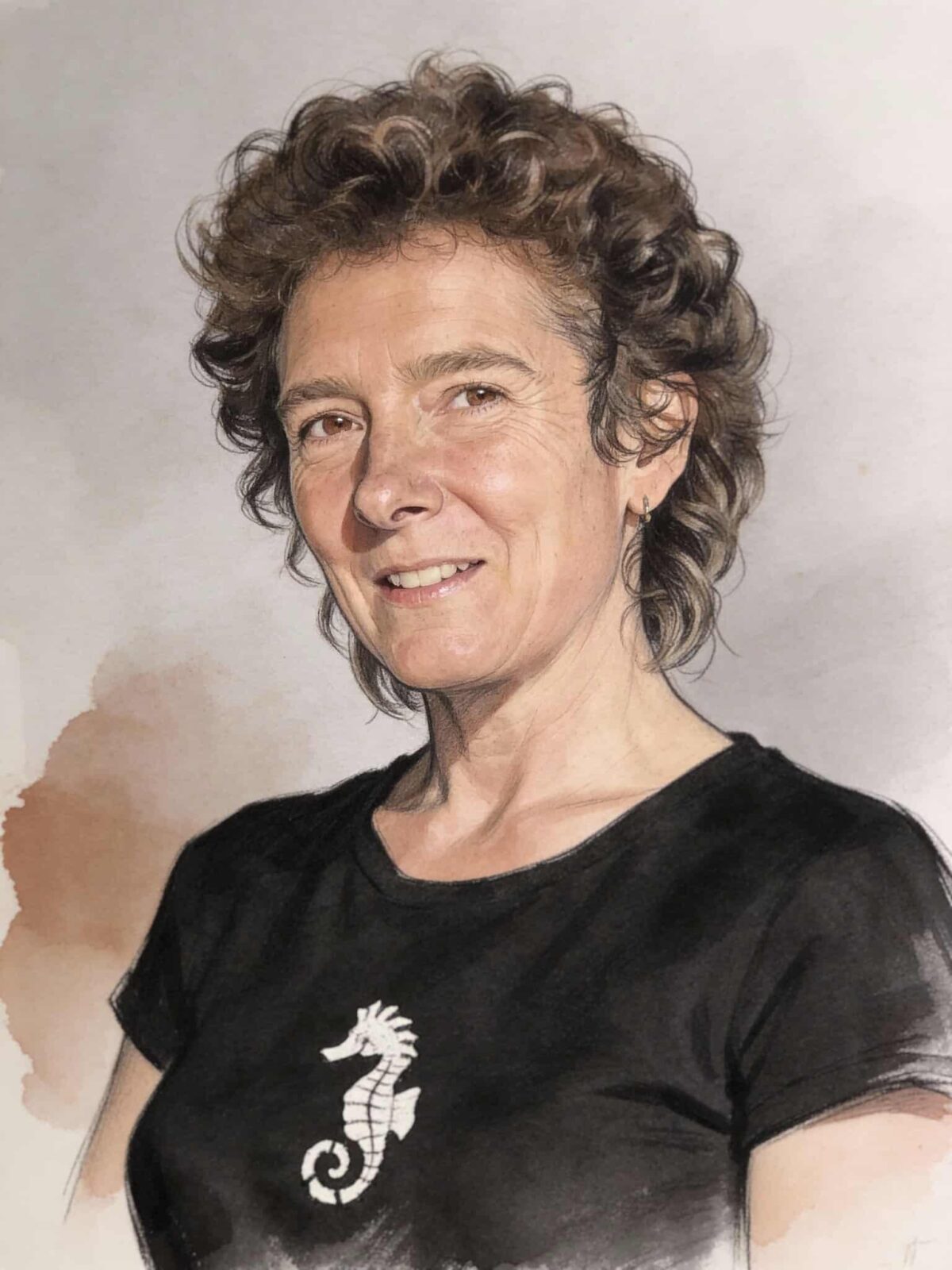
Illustration of Jeanette Winterson based on a photograph by Mariusz Kubik, http://www.mariuszkubik.pl, CC BY-SA 3.0, via Wikimedia Commons.
