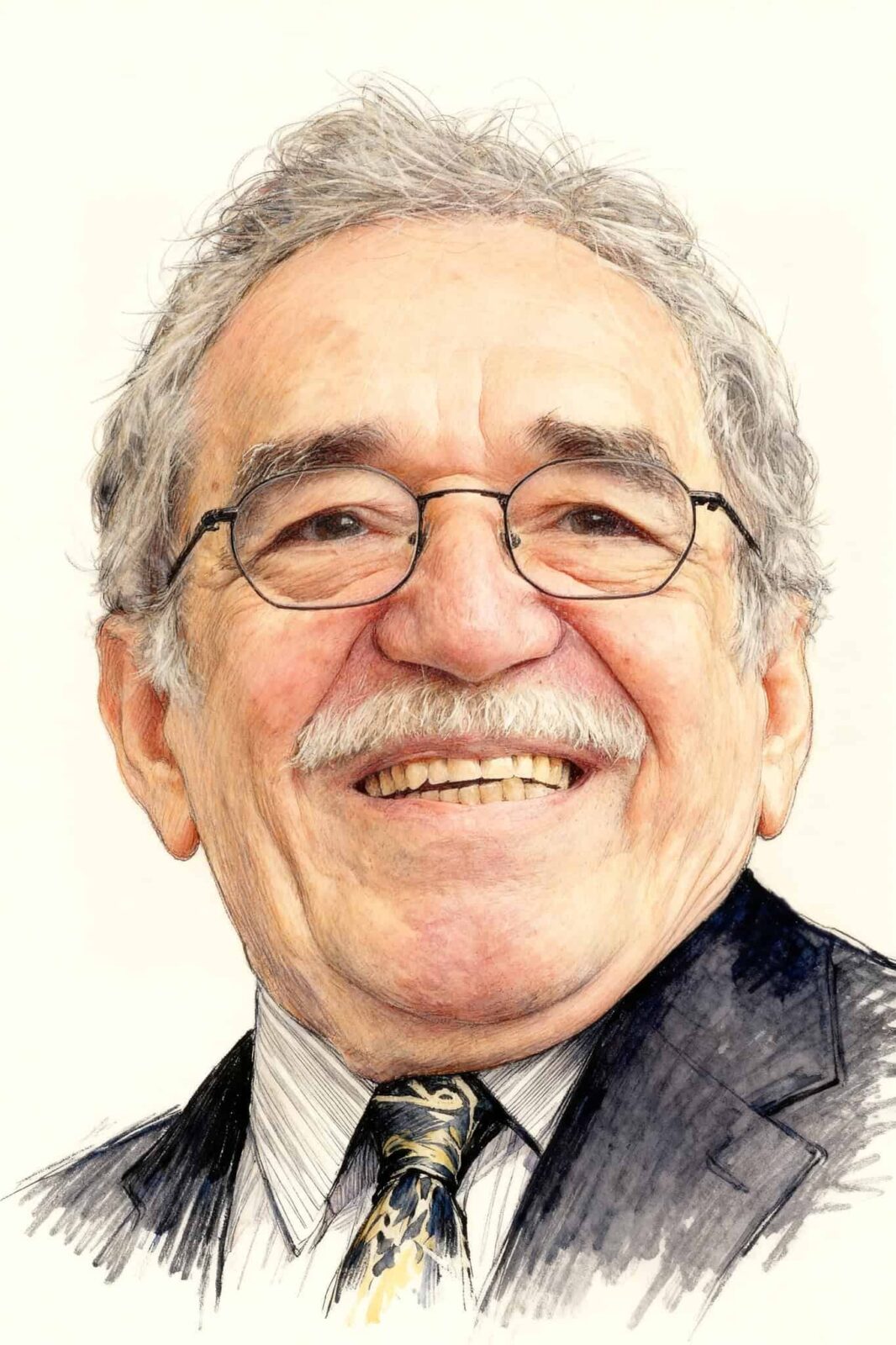
Few names in literary fiction carry the weight of Gabriel García Márquez. Nobel laureate, Neustadt Prize winner, and the writer most closely identified with magic realism, García Márquez produced in One Hundred Years of Solitude (1967) one of the most celebrated novels of the twentieth century. Signed copies of his books are extremely rare in the English-language market, and their scarcity has only sharpened since his death in 2014. The Netflix adaptation of One Hundred Years of Solitude, released in 2024 to widespread critical acclaim, has brought a major new wave of interest to his work. For collectors with serious ambitions, Gabriel García Márquez signed first editions represent one of the most significant names in the market.

Gabriel García Márquez El amor en los tiempos del cólera 1985 1st Ed Signed SC
🇺🇸 Price: US $3,995.00
Buy It Now

Memoria de Mis Putas Tristes - Gabriel Garcia Márquez - Signed Limited Ed - HCDJ
🇺🇸 Price: US $1,700.00
Buy It Now
Gabriel Garcia Marquez LOVE IN THE TIME OF CHOLERA Signed 1st American Edition 1
🇺🇸 Price: US $6,012.44
Buy It Now


16 Signed First Editions GABRIEL GARCIA MARQUEZ ~ One Hundred Years of Solitude
🇺🇸 Price: US $48,000.00
Buy It Now
SIGNED/INSCRIBED Gabriel Garcia Marquez book Memoria de Mis Putas Tristes HCDJ
🇺🇸 Price: US $1,650.00
Buy It Now
Signed 1st Edition Gabriel Garcia Marquez Love In The Time Of Cholera
🇺🇸 Price: US $5,000.00
Buy It Now
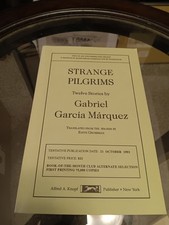
Strange Pilgrims Uncorrected Proof by Marquez Signed by Translator PB
🇺🇸 Price: US $300.00
Buy It Now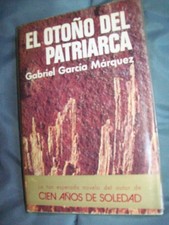
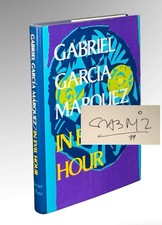
Garcia Marquez/In Evil Hour SIGNED and Dated First Edition; NF/NF; Uncommon!
🇺🇸 Price: US $1,800.00
Buy It Now
Gabriel Garcia Marquez / News of a Kidnapping Signed 1st Edition 1997 #1409616
🇺🇸 Price: US $750.00
Buy It Now
El General en Su Laberinto - GABRIEL GARCIA MARQUEZ - SIGNED 1st Col. Ed. 1989
🇺🇸 Price: US $1,500.00
Buy It Now
Gabriel Garcia Marquez SIGNED Memoria de Mis Putas Tristes Hardcover 2004
🇺🇸 Price: US $1,400.00
Buy It Now
Garcia Marquez/El Otono Del Patriarca First Spanish Edition; F/NF; SIGNED!
🇺🇸 Price: US $2,500.00
Buy It NowSigned By Author is an eBay affiliate. We may earn a commission from qualifying purchases.
About Gabriel García Márquez (1927–2014)
Gabriel García Márquez was born on 6 March 1927 in Aracataca, a small town in the Caribbean lowlands of Colombia, and spent the first years of his life with his maternal grandparents. His grandfather, a veteran of Colombia’s civil wars, told him stories of the country’s violent history with unflinching directness. His grandmother told him stories of ghosts and omens as though they were equally factual. The combination of those two voices, the historical and the supernatural delivered in the same matter-of-fact tone, would turn out to be the foundation of everything he wrote.
He studied law in Bogotá without great enthusiasm and eventually abandoned it for journalism, a trade that suited him better and which he practised, with considerable flair, for most of his adult life. Working as a correspondent in Colombia, Cuba, and Europe in the 1950s, he encountered Faulkner and Hemingway, and later Kafka, and found in those writers the permission to approach his own material differently. He had already published a handful of stories and a short novel, but the work that would change everything arrived in 1967.
One Hundred Years of Solitude tells the story of the Buendía family across seven generations in the fictional town of Macondo, a place that reads simultaneously as a specific Colombian landscape and as a microcosm of all of Latin America. García Márquez is said to have turned his car around on the way to a family holiday when the opening sentence arrived fully formed in his mind. He spent the next eighteen months writing the book, while his wife managed the family finances and fielded their creditors. The novel sold out within a week of publication in Buenos Aires. It has since sold more than fifty million copies and been translated into forty languages, and it remains the work by which magic realism, the literary mode with which his name is most closely associated, is most often defined.
The Nobel Prize in Literature followed in 1982, awarded for work in which, as the Swedish Academy put it, the fantastic and the realistic are combined in a richly composed world reflecting a continent’s life and conflicts. He was the first Colombian to receive the honour. By that point The Autumn of the Patriarch (1975) and Love in the Time of Cholera (1985) had confirmed that the achievement of One Hundred Years of Solitude was not a single exceptional event but the expression of a coherent and inexhaustible literary imagination. He had also received the Neustadt International Prize for Literature and the Rómulo Gallegos Prize, among numerous other honours.
García Márquez was a politically engaged figure throughout his life, closely allied with the Cuban Revolution and a personal friend of Fidel Castro, a relationship that brought him considerable admiration in Latin America and considerable suspicion from the United States government. He lived for long periods in Mexico City, where he died in April 2014 at the age of eighty-seven.
During his lifetime he refused all requests to adapt One Hundred Years of Solitude for screen, believing the novel’s length and interior logic made it unfilmable. After his death, his sons authorised Netflix to proceed. The resulting series, filmed entirely in Colombia and released in December 2024, was one of the most critically praised and widely watched foreign-language productions the platform has made. A second and final part is due in 2026. The adaptation has brought García Márquez’s work to an enormous new audience, and demand for first editions and signed copies of his books has followed accordingly.
Illustration of Gabriel García Márquez based on a photograph by Jose Lara, CC BY-SA 2.0, via Wikimedia Commons.
