Few writers working today have assembled a prize record quite like Benjamin Myers. Winner of the Walter Scott Prize for The Gallows Pole and the Goldsmiths Prize for Cuddy, and a Fellow of the Royal Society of Literature, he is an author whose critical standing is still rising. Benjamin Myers signed first editions, particularly of The Gallows Pole (2017) and the early Bluemoose titles, are already scarce, and the BBC adaptation has sharpened collector interest considerably. With Rare Singles also heading for the screen, the trajectory here is clearly upward. A name every collector should know.
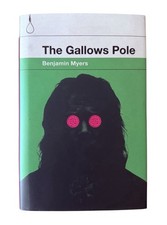
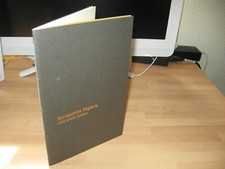
The Gallows Pole, Benjamin Myers. Bluemoose 2017 Hardback. Signed First Edition.
🇺🇸 Price: US $1,063.79
Buy It Now

Signed By Author is an eBay affiliate. We may earn a commission from qualifying purchases.
About Benjamin Myers
Benjamin Myers was born in Durham in 1976 and grew up in Belmont, a former mining community on the outskirts of the city. It was not a literary upbringing in any conventional sense, but it was one that gave him an ear for place and working-class life that runs through everything he has since written. As a teenager he fell deep into the Durham hardcore punk scene, formed a band, and began writing music journalism, eventually contributing to Melody Maker, NME, and a string of other publications from a squat in south London. He took music seriously as a way of understanding identity and community, and that instinct has never entirely left him. He now lives in the Upper Calder Valley in West Yorkshire, the landscape that provided the setting for the book that made his wider reputation.
His early fiction, published under the name Ben Myers, included a fictionalised account of the life of Richey Edwards of the Manic Street Preachers, which attracted both admiration and controversy. The novel that first announced him as a major talent was Pig Iron (2012), a fierce, immersive portrait of the traveller community in the north-east of England, published by the independent Bluemoose Books. It won the inaugural Gordon Burn Prize, a fitting tribute given how much his work shared with Burn’s own unflinching interest in the overlooked and the marginalised.
Beastings followed in 2014, a pared-back, almost mythic pursuit narrative set in rural Cumbria, which won the Portico Prize for Literature. He also stepped sideways into crime fiction with Turning Blue (2016) and its sequel These Darkening Days (2017), a pair of novels set in the bleaker reaches of the Yorkshire Dales and marketed as ‘folk crime’ – a label that captures something real about Myers’s approach to the genre, which owes more to David Peace and Gordon Burn than to any conventional police procedural. The books introduced detective Jim Brindle and journalist Roddy Mace, and were praised by writers including Val McDermid. They sit at an angle to the rest of his work but share its preoccupations entirely: landscape as moral weather, communities under pressure, and a prose style that refuses to behave itself.
Then came The Gallows Pole (2017), the historical fiction novel that changed the scale of his readership entirely. Based on the true story of the Cragg Vale Coiners, an eighteenth-century gang of West Yorkshire weavers who turned to coin-clipping to survive the upheavals of early industrialisation, it is a book of remarkable force and strangeness, written in a dialect-inflected prose that is entirely its own. It won the Walter Scott Prize for Historical Fiction in 2018, one of the most prestigious awards the genre offers, and was adapted for BBC Two and A24 by Shane Meadows in 2023, introducing Myers’s work to a substantial new audience.
The Offing (2019), a quieter, more tender novel about an unlikely friendship between a young man and an older woman in post-war Robin Hood’s Bay, became a bestseller in Germany, was serialised on BBC Radio 4’s Book at Bedtime, and demonstrated that Myers’s range was considerably broader than any single label could contain. The Perfect Golden Circle (2022) followed two very different men making crop circles across a long hot summer in rural England, the novel building its own peculiar, dreamlike logic.
In 2023 came Cuddy, a bold retelling of the life of St Cuthbert, the hermit saint of the north, structured across multiple time periods and written with a formal ambition that impressed both critics and prize judges. It won the 2023 Goldsmiths Prize, awarded for fiction that opens up new possibilities for the novel form, and confirmed Myers’s standing as one of the most original and serious writers currently at work in Britain. He was elected a Fellow of the Royal Society of Literature the same year.
His latest novel, Rare Singles (2025), is set in Scarborough over a Northern Soul weekender in the 1960s, and is already in development for screen adaptation. It is, like much of his work, about music, friendship, and the specific textures of northern English life, explored through a subject he knows from the inside.
Myers’s writing resists easy categorisation. He has published poetry, short stories, nature writing, and journalism alongside his fiction, and the work as a whole is held together not by genre conventions but by a sensibility: a deep feeling for landscape, for communities under pressure, and for the stubborn dignity of people history tends to overlook.
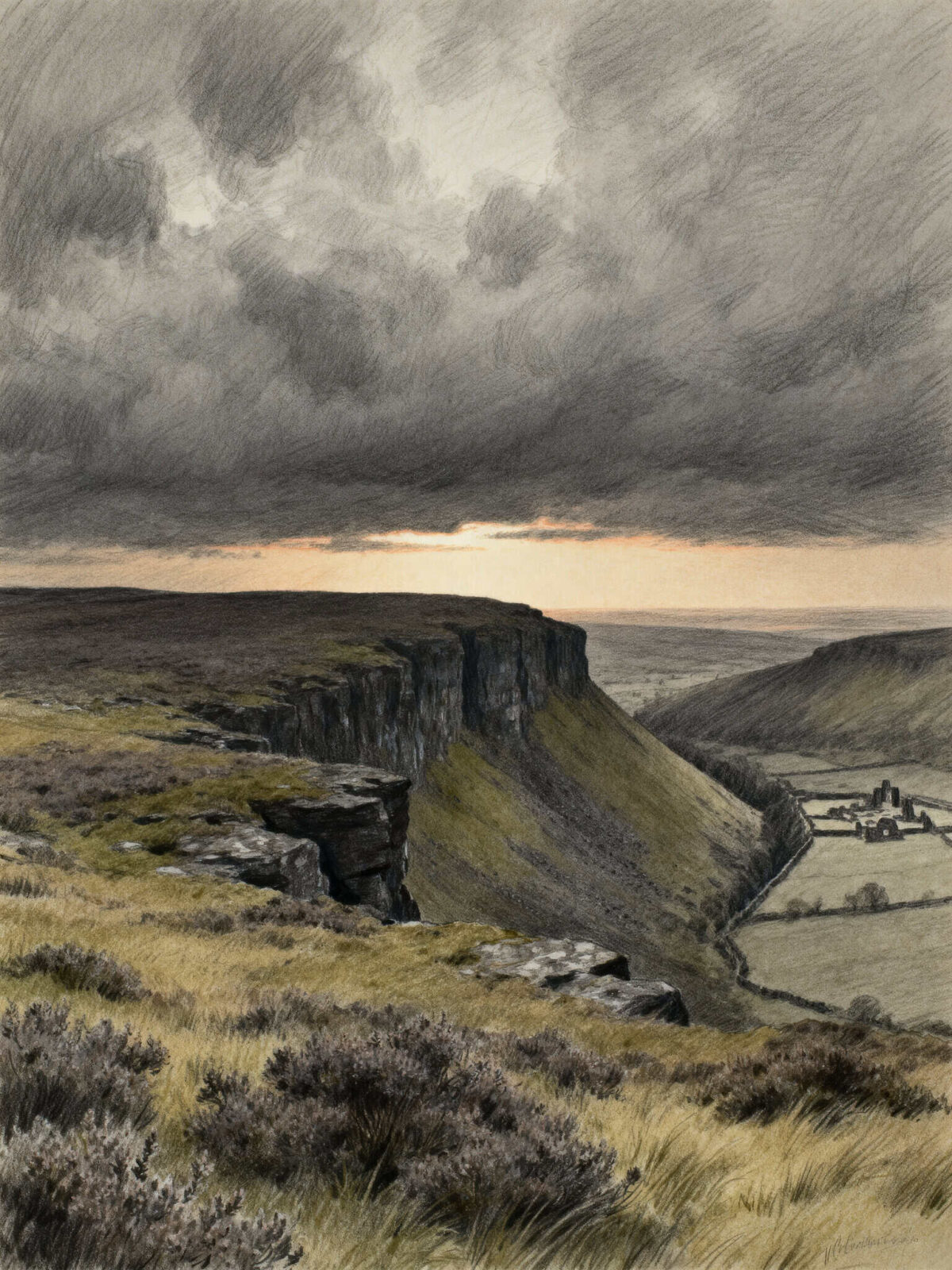
AI-generated illustration for editorial purposes; no endorsement implied.