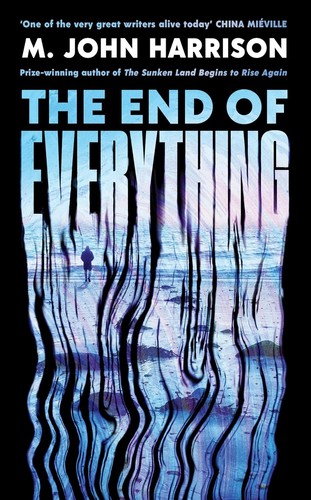
Congratulations to M. John Harrison on winning the 2026 Booker Prize for The End of Everything. The prize was announced on yesterday evening at Old Billingsgate in London. It’s a historic win twice over: at 81, he’s the oldest author to take the prize, and the first to arrive from science fiction rather than merely borrow from it. Long admired by fellow novelists but too often missed by a wider readership, Harrison has earned this moment.
The End of Everything unfolds on a post-apocalyptic stretch of the Kent coast, where Phillip Tennent scrapes by with his aunt amid social collapse and a strange alien presence. Years after the crisis, no one seems quite sure what happened. Harrison has said the book began with the 2008 financial crash. It’s a slim novel, just over 200 pages, with plenty packed in. The judges chose it unanimously.
Browse signed first editions by M. John Harrison and discover one of the most original careers in British fiction.
What the press is saying
NPR reports that Booker Foundation chief executive Gaby Wood called Harrison “the first Booker winner to have emerged from the bona fide SF world.”
CNN notes that the judges saw the novel as thriller, mystery, satire, dystopia and road novel, and that it was chosen from 163 submissions.
The Guardian’s Michel Faber called it “dreamlike and baffling” when the book appeared in June.
The Bookseller calls the win historic, and notes that it’s also the first Booker victory for Harrison’s publisher, Serpent’s Tail.
Own a piece of literary history
Harrison has been writing for more than sixty years, since his emergence alongside the New Wave of British speculative fiction in the 1960s. His body of work is as varied as it is distinctive. He has won the Boardman Tasker Prize, the Arthur C. Clarke Award and the Goldsmiths Prize, for books including Climbers, Light, The Course of the Heart and the Viriconium sequence. Robert Macfarlane has called him “one of the best writers of fiction currently at work in English”.
For collectors, the early Gollancz hardbacks are worth seeking out, as is Harrison’s 1971 debut, The Committed Men. He was a familiar face at genre conventions, and warmly inscribed copies from events such as FantasyCon and Eastercon do turn up. They offer a pleasing glimpse of the man behind the books. A Booker win brings a long career into sharper focus, and Harrison’s is well worth another look.