Stephen King signed first editions occupy a category entirely their own in the American collector market. The early Maine novels are the benchmark: signed copies of The Shining (1977), The Stand (1978), and Cujo (1981) are genuinely scarce and command serious prices, while later limited editions from Cemetery Dance command devoted collector followings of their own. With over 350 million books sold, a National Medal of Arts, and a pipeline of screen adaptations that never seems to empty, King’s market is among the most stable in contemporary fiction. Stephen King signed first editions are as close to a guaranteed long-term investment as the collecting world offers.

*SIGNED* 1ST/1ST EDITION INSOMNIA STEPHEN KING AUTOGRAPHED RARE FIRST
🇺🇸 Price: US $360.00
Buy It Now
1978 STEPHEN KING The Stand SIGNED First Edition 1st Printing Near Fine
🇺🇸 Price: US $7,499.00
Buy It Now

Authentic Stephen King Signed First Edition 1st Printing Bag Of Bones HCDJ Nice!
🇺🇸 Price: US $1,200.00
Buy It Now
Stephen King, Mick Garris RIDING THE BULLET Limited Signed first Edition
🇺🇸 Price: US $350.00
Buy It Now
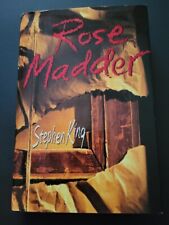
ROSE MADDER by STEPHEN KING Signed First Edition 1st Print 1995 Hardcover/ DJ
🇺🇸 Price: US $675.00
Buy It Now
Signed Y.O.P. STEPHEN KING Under The Dome First Edition 2009 Hardcover Fine+
🇺🇸 Price: US $600.00
Buy It Now
The Stand ~ SIGNED by STEPHEN KING ~ First Edition ~ 1st Printing 1978
🇺🇸 Price: US $7,500.00
Buy It Now
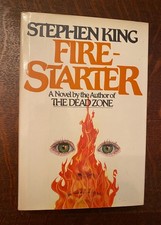
Firestarter Stephen King Signed First Edition Viking 2nd Print Hardcover - NEW
🇺🇸 Price: US $2,200.00
Buy It Now
STEPHEN KING SIGNED & JSA Letter Certified - EYES OF THE DRAGON First Edition!
🇺🇸 Price: US $1,638.75
Buy It Now
'Salem's Lot ~ SIGNED by STEPHEN KING ~ First Edition ~ 1st Printing 1975
🇺🇸 Price: US $14,000.00
Buy It Now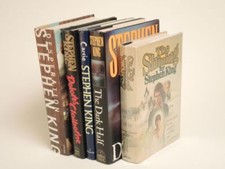
STEPHEN KING SIGNED ARCHIVE INCLUDING FIRST EDITION, FIRST PRINTINGS (5 BOOKS)
🇺🇸 Price: US $9,000.00
Buy It Now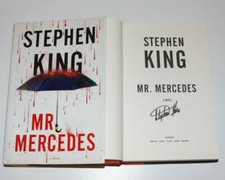
STEPHEN KING SIGNED 'MR MERCEDES' 1ST/1ST FIRST EDITION PRINTING BOOK NOVEL COA
🇺🇸 Price: US $1,499.99
Buy It Now

Signed By Author is an eBay affiliate. We may earn a commission from qualifying purchases.
About Stephen King
Stephen King was born in Portland, Maine, in 1947, and grew up largely in the small towns of New England that would later become the geography of his imagination. His father left when King was two, and he was raised by his mother, moving between relatives across several states before the family settled in Durham, Maine. He began writing stories as a child, selling mimeographed newsletters to schoolmates, and by his teens was submitting to science fiction magazines with the dogged persistence of someone who already knew this was what he was going to do.
He studied English at the University of Maine, graduated in 1970, and spent the early years of his marriage to Tabitha Spruce working as a laundry operative and a school teacher while writing in whatever time he could find. The breakthrough came in 1973 when Doubleday bought Carrie, the story of a telekinetic teenager destroyed by her classmates and her fanatically religious mother. King had thrown the manuscript away; Tabitha rescued it from the bin. The paperback rights sold for $400,000, and the family’s financial struggles were over. When Brian De Palma’s film adaptation arrived in 1976, with Sissy Spacek in the lead role earning an Academy Award nomination, it established something that has barely let up since: Stephen King on the page and Stephen King on the screen as parallel and mutually reinforcing phenomena.
The books that followed in the late 1970s and early 1980s laid the foundations of a career unlike any other in horror fiction. The Shining (1977), The Stand (1978), The Dead Zone (1979), Cujo (1981), The Running Man (1982, published as Richard Bachman) – they arrived almost faster than readers could absorb them, and each one deepened the sense that King was doing something more than genre entertainment. He was mapping a particular kind of American dread: the malevolence lurking in ordinary places, in marriages and small towns and children’s bedrooms, in the institutions ordinary people trusted to protect them. The horror novel had never quite seen this before.
Different Seasons (1982), a collection of novellas with little supernatural content, surprised critics and readers alike and produced two of the most celebrated films of the following decade: Stand by Me (1986) and The Shawshank Redemption (1994), the latter earning seven Academy Award nominations and becoming, by some measures, the most-watched film in history. Misery (1990) gave Kathy Bates the role that won her the Academy Award for Best Actress – the only Oscar win for a King adaptation to date, though far from the only nomination.
King has spoken frankly about his addiction to alcohol and cocaine through much of the 1980s, a period he says he barely remembers writing through. His recovery, and a near-fatal accident in 1999 when he was struck by a van while walking near his home, produced On Writing (2000), a memoir about craft and survival that many writers – working in any genre – consider the most useful book about the practice of writing they have read.
The honours are considerable. King has received the National Book Foundation’s Medal for Distinguished Contribution to American Letters, the National Medal of Arts, the Mystery Writers of America Grand Master Award, the World Fantasy Award for Life Achievement, and multiple Bram Stoker Awards. His books have sold more than 350 million copies worldwide.
The adaptations show no sign of slowing. 2025 alone brought four film releases including The Long Walk and The Life of Chuck, the latter directed by Mike Flanagan and tipped for awards attention, alongside television series including The Institute. A Mike Flanagan-directed reimagining of Carrie for Amazon Prime Video is expected in 2026. At the time of writing, King continues to publish – Never Flinch, a new Holly Gibney novel, appeared in 2025 – and the pipeline of screen adaptations stretches further ahead than most authors could dream of.
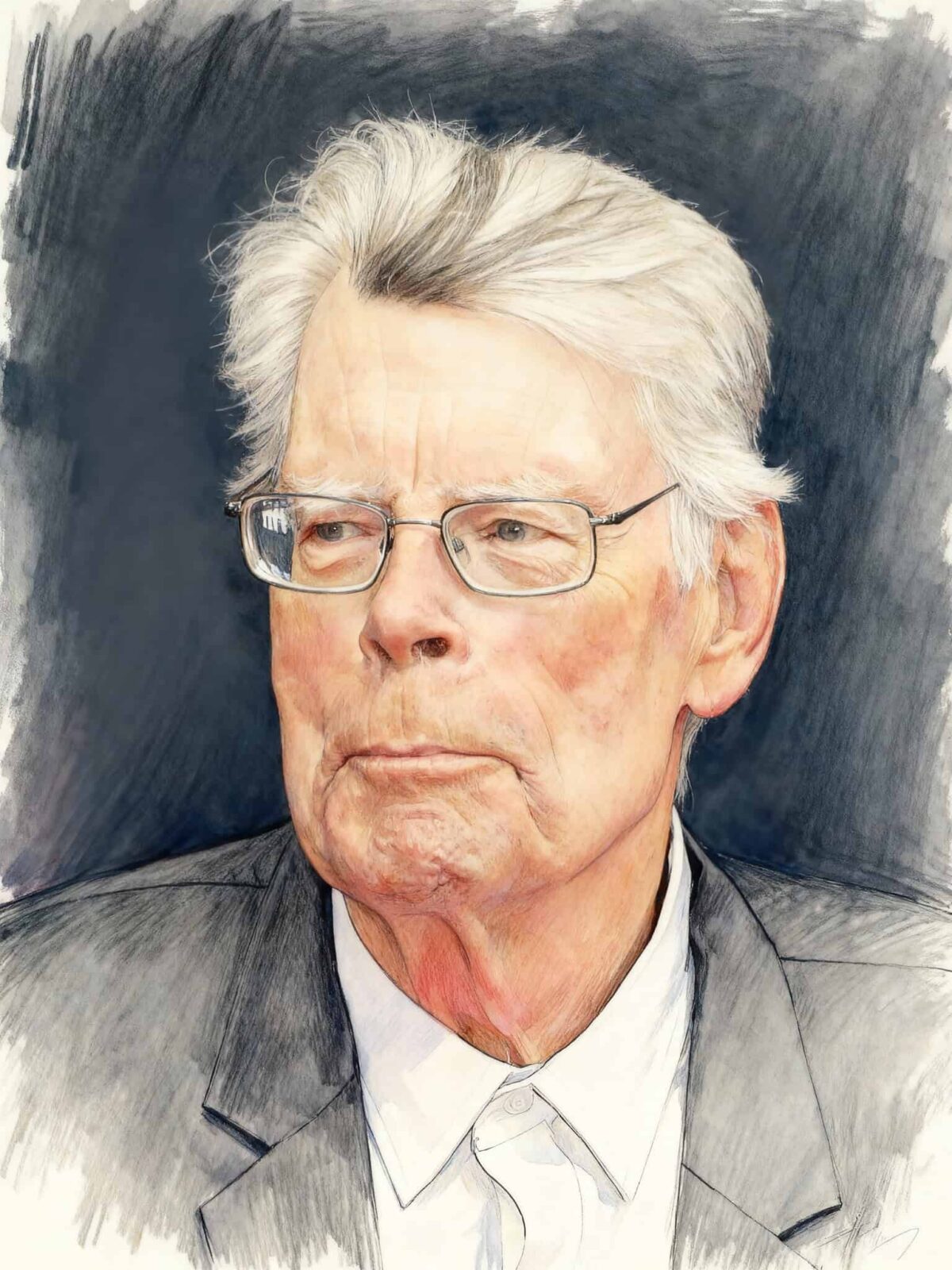
Illustration of Stephen King based on a photo by Kevin Payravi, CC BY-SA 4.0, via Wikimedia Commons.
.jpg)