Some books arrive with a story already attached. Others acquire one. The copy of John Keats and Percy Bysshe Shelley: Essential Poems that sits in my collection belongs firmly to the second category, and the story it carries is one I find myself returning to.
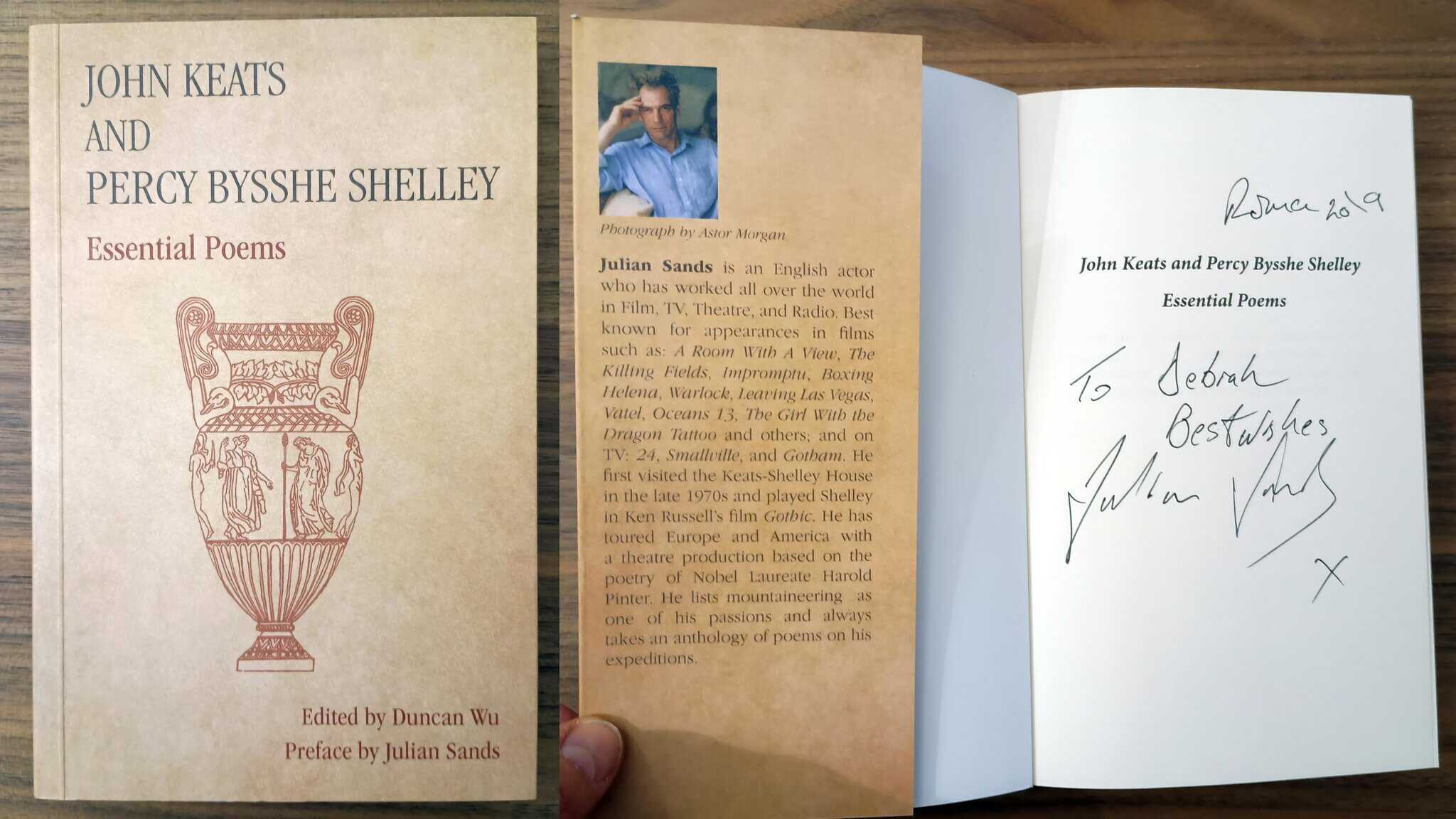
On the afternoon of 6 September 2019, the library of the Keats-Shelley House in Rome hosted a poetry reading. The house museum stands on the Piazza di Spagna, beside the Spanish Steps, in the apartment where Keats died in 1821 at the age of twenty-five. It is an incredibly atmospheric place, an oasis of sorts, where you cross the threshold and the noise of a teeming tourist destination fades to a distant hubbub. Julian Sands, the English actor, was reading from the work of Keats and Shelley, two poets he had loved since his twenties and whose world he had spent years inhabiting, both on stage and off. He had first visited the house in the late 1970s, played Shelley in Ken Russell’s film Gothic, and had also written the preface to a paperback anthology published by the museum, the very book he was reading from that afternoon.
It was a small, intimate event in the beautifully preserved library with an audience of about thirty people, and something in the air that made you feel the afternoon was charmed. Afterwards, glasses of Prosecco were poured, and we spilled out onto the terrace. Sands sat on a bench with his drink beside him, the words of Keats and Shelley painted on a sign behind him, and met guests warmly and unhurriedly, signing copies of the anthology.
Later, once the signings were done and he was simply mingling among the guests, we met again, and I was flabbergasted, and secretly flattered, when he remembered my name. We fell into conversation about mountaineering. I had just returned from Zermatt, at the foot of the Matterhorn, and mentioned it. His expression changed, and he started talking with genuine enthusiasm. He told me he had climbed the Matterhorn, that climbing mountains gave him clarity about his place in the world. I felt an intrinsic passion and intensity about him, a bundle of energy and love of life that made everything he said feel completely, utterly meant.
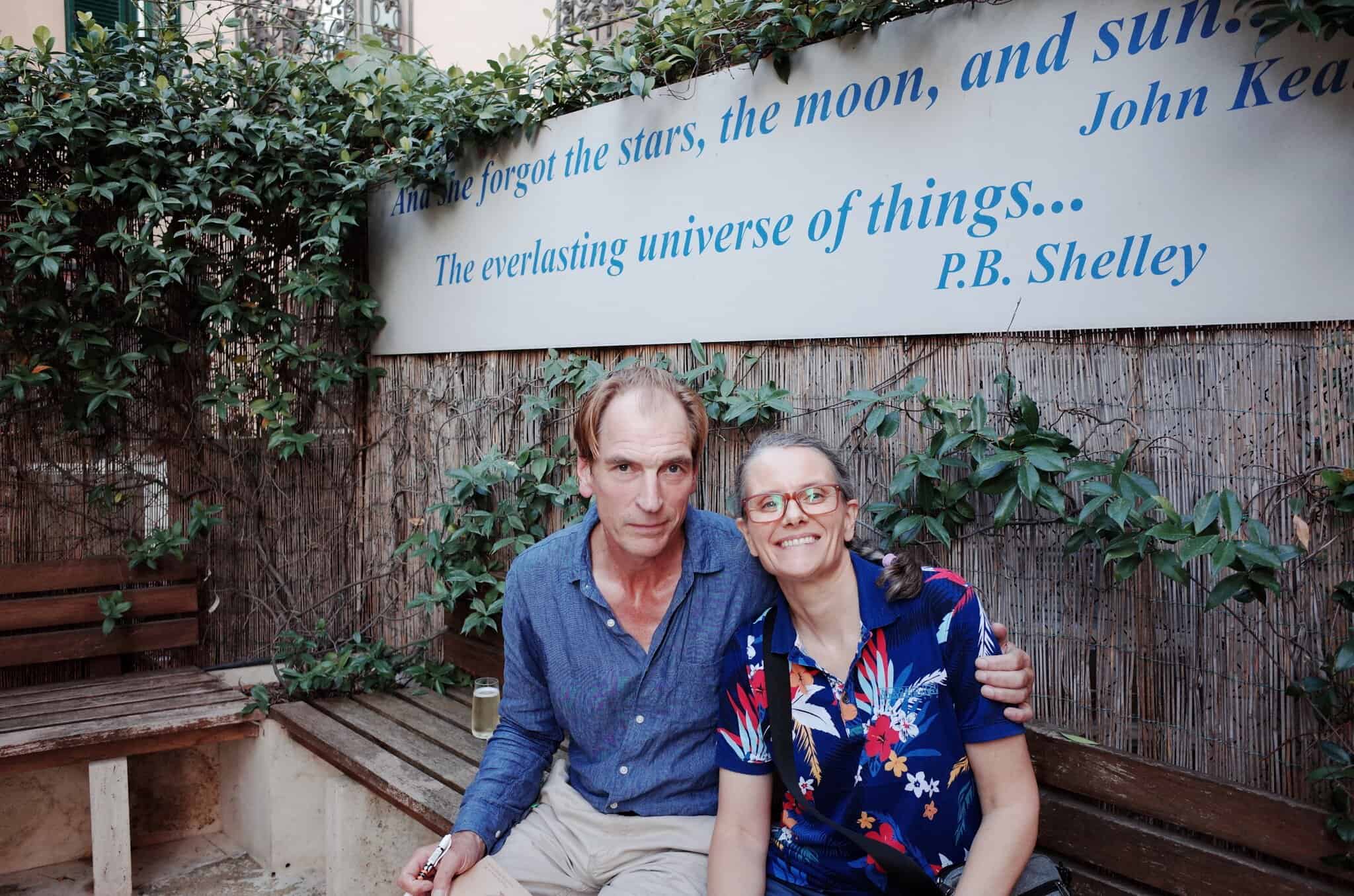
The photo of us on the terrace that evening was taken by Elisabetta Umiliani, the daughter of the Italian composer Piero Umiliani. If that name doesn’t immediately ring a bell, this song title will: Mah-nà mah-nà. Umiliani wrote it in a single afternoon in 1968, as incidental music for a film project, never imagining it would become one of the most recognisable melodies in the world, immortalised by the Muppets and hummed by people who have never heard his name. His daughter, like the rest of us, was simply there for the poetry.
Julian Sands died in January 2024, during a solo hike in the San Gabriel Mountains in California. He was sixty-five. The mountaineering passion he had mentioned that afternoon on the terrace, the same quality that drew him to Shelley and to dangerous and beautiful places, was with him at the end.
The book is a modest production, a paperback anthology sold in the museum shop. It is not a rare first edition in the conventional sense. But it carries a signature, a date, a dedication, and is a wonderful memento of an unforgettable encounter.