
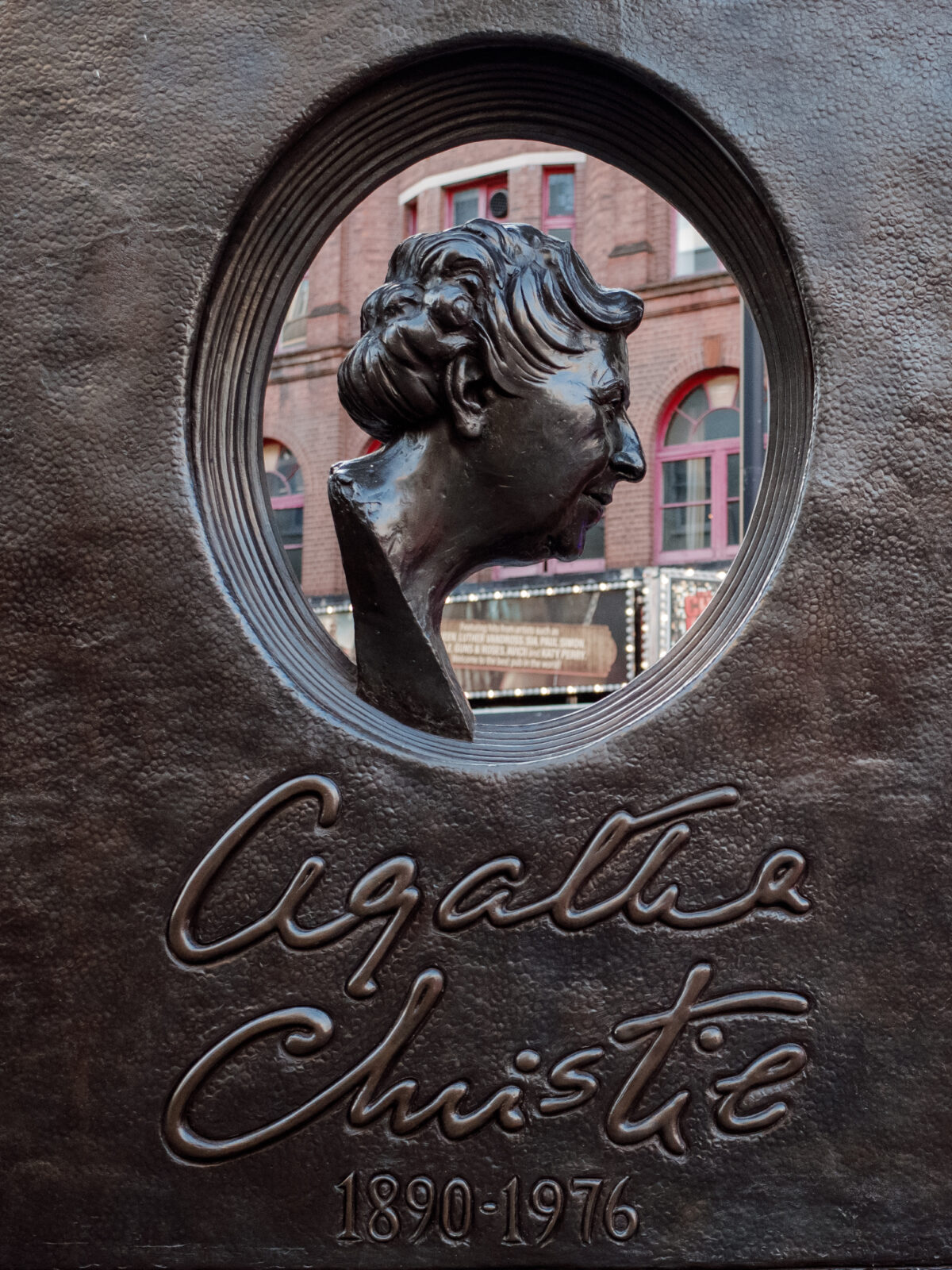
Today marks the 50th anniversary of the death of Agatha Christie, a writer whose influence on popular fiction remains unparalleled. Half a century after her passing in January 1976, Christie is still one of the most widely read authors in the world, with her novels translated into more than 100 languages and sales estimated in the billions. Few writers have achieved such enduring global reach, and fewer still continue to feel so contemporary.
Much of Christie’s appeal lies in her unforgettable characters. Hercule Poirot, with his immaculate moustaches, fastidious manners, and formidable “little grey cells,” remains the most famous fictional detective ever created. From The Mysterious Affair at Styles to Murder on the Orient Express and Death on the Nile, Poirot’s cases combine intellectual puzzle-solving with sharp psychological insight. In contrast, Miss Jane Marple operates quietly in the background, using her understanding of human nature in the seemingly tranquil village of St Mary Mead. Novels such as The Murder at the Vicarage and A Murder Is Announced demonstrate Christie’s genius for showing how darkness can lurk beneath the most polite of façades.
Christie’s standalone novels are just as central to her legacy. And Then There Were None, a masterclass in suspense and narrative control, is widely regarded as one of the best-selling novels of all time. Its closed-circle setting and merciless logic continue to inspire writers, filmmakers, and television producers. Equally influential is The ABC Murders, which plays boldly with structure and reader expectations, proving that Christie was always willing to innovate within the detective genre she helped define.
Born in 1890 in Torquay, Devon, Agatha Mary Clarissa Christie grew up in a comfortable middle-class household and was educated largely at home. Her experiences as a nurse during the First World War gave her a detailed knowledge of poisons, a skill she would famously deploy throughout her fiction. Over a career spanning more than five decades, she wrote 66 detective novels, 14 short story collections, and the long-running play The Mousetrap, which has been performed continuously in London since 1952.
What makes Christie’s work endure is not just the ingenuity of her plots, but her deep understanding of people. Her books are rarely about violence for its own sake; they are about motive, jealousy, fear, love, and the social tensions that exist in every community. Her prose is clear and economical, allowing readers to focus on the puzzle while subtly guiding them toward false conclusions.
Fifty years after her death, Agatha Christie remains a cultural constant. New adaptations, reissues, and rediscoveries ensure that each generation finds her anew. In an age of ever more complex crime fiction, her work stands as a reminder that the most powerful mysteries often come down to human nature, carefully observed and brilliantly misdirected.