As the red carpet is rolled out and anticipation builds for this year’s Academy Awards, attention naturally turns to the performances, the directors and the spectacle of the ceremony itself. Yet the Best Adapted Screenplay nominees remind us that long before the cameras rolled, these stories first lived on the printed page.
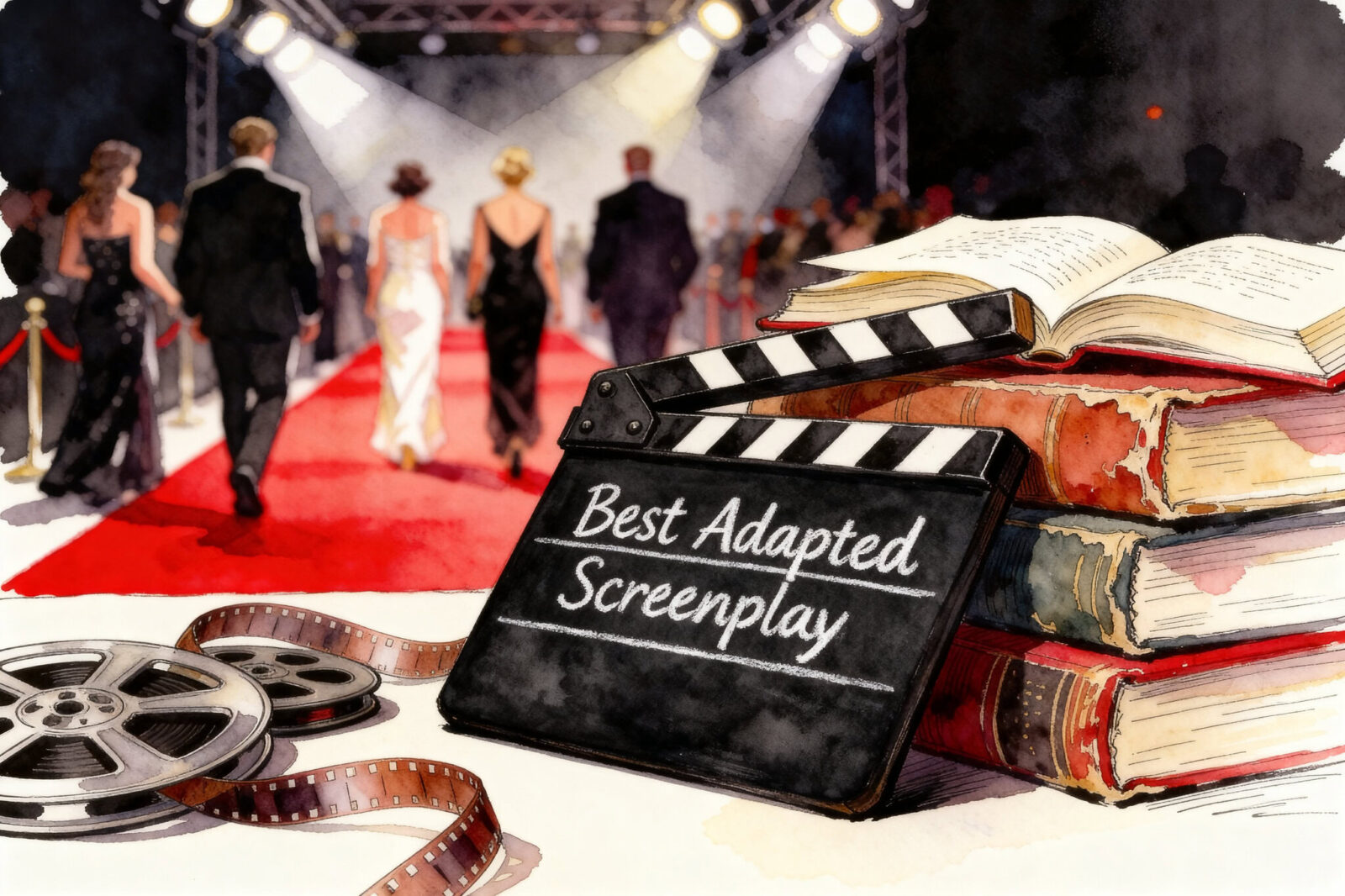
This year’s Best Adapted Screenplay nominees once again underline how central literature remains to cinema. Among the most discussed contenders are films drawn from novels, novellas and classic works of fiction. Hamnet, adapted from the acclaimed novel by Maggie O’Farrell and inspired by the life and family of William Shakespeare, represents contemporary literary fiction at its finest. At the same time, new interpretations of enduring classics such as Frankenstein by Mary Shelley demonstrate the continuing power of nineteenth century literature to speak to modern audiences. Contemporary heavyweights are equally present, with One Battle After Another bringing Thomas Pynchon’s novel Vineland to the screen, while Train Dreams introduces a wider global audience to Denis Johnson’s celebrated novella. Together, this year’s Best Adapted Screenplay nominees showcase the remarkable range of literary sources shaping modern cinema.
For readers and collectors, the question inevitably follows: great film, but have you read the book?
A screen adaptation almost always brings renewed attention to its source material. Once a novel becomes an Oscar contender, publishers typically release film tie in editions, redesign covers with cinematic imagery and promote the book alongside awards publicity. Bookshops create prominent displays; online retailers adjust algorithms; media coverage links author and actor in the public imagination. The result is often a dramatic surge in sales.
History offers clear precedents. When The Lord of the Rings reached cinemas, J. R. R. Tolkien’s epic returned to bestseller lists worldwide decades after first publication. More recently, literary novels adapted for prestige film and streaming platforms have experienced similar revivals. Awards recognition amplifies that effect. A Best Adapted Screenplay nomination, or better still a win, creates a cultural moment that can push a title back into the spotlight.
For collectors of signed and first edition books, this renewed attention can be particularly significant. A modern first edition published quietly a few years earlier may suddenly attract heightened demand. Signed copies, especially when an author has passed away, become finite artefacts linked to a story now fixed in cinematic history. Interest in Denis Johnson’s Train Dreams, for example, has strengthened following its screen adaptation, encouraging new readers to seek out earlier printings of the novella.
However, the relationship between film success and book sales is not always straightforward. Sometimes the boost is immediate but temporary, spiking during awards season before settling back to previous levels. In other cases, the adaptation reshapes public perception of the story in ways that divide audiences. A bold reinterpretation may spark debate about fidelity to the source material, while a poorly received film can dampen enthusiasm for the original text.
Yet for established literary works, the long term impact tends to be positive. An Oscar nomination embeds a story within the cultural conversation. It introduces authors such as Maggie O’Farrell, Thomas Pynchon, Denis Johnson and Mary Shelley to viewers who may never have encountered their work otherwise. Even when audiences discover the story first through film, many are drawn back to the book in search of greater depth and nuance.
There is also a distinction between modern and classic literature. Contemporary novels adapted within a few years of publication often see collectors focusing on true first editions that predate film announcements. By contrast, when a classic such as Frankenstein receives a new cinematic interpretation, attention can extend across centuries of publishing history, from early illustrated editions to finely bound collectible printings.
Ultimately, the Best Adapted Screenplay nominees serve as a reminder that cinema and literature remain profoundly intertwined. Film may provide spectacle and immediacy, but the novel offers interiority, texture and permanence. Long after the applause fades and the Oscar statuettes are engraved, it is often the book that continues to endure quietly on the shelf.
So as this year’s Academy Awards approach, perhaps the most rewarding question is not simply who will win, but which stories will last. And for collectors, that question begins, as it always has, with the book.