
Barry Unsworth signed first editions occupy a distinctive and undervalued corner of the British literary collecting market, and that is precisely what makes them interesting. Winner of the Booker Prize for Sacred Hunger (1992), one of the most morally serious and ambitious British novels of the last century, Unsworth was a writer of considerable stature whose early first editions remain genuinely scarce. Sacred Hunger itself, and the Booker-shortlisted Pascali’s Island (1980), attract the most consistent collector attention, and copies in fine condition with dust jackets are hard to track down. With growing critical reassessment of his work since his death in 2012, and his subject matter resonating as strongly as ever, Barry Unsworth signed first editions are a collector’s name worth knowing well.

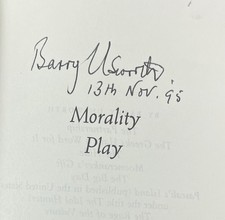


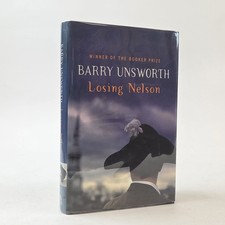
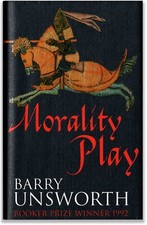


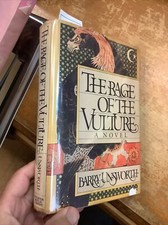


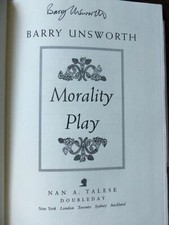


The Rage of the Vulture - Signed by Barry Unsworth - First Edition Hardcover
🇺🇸 Price: US $175.00
Buy It Now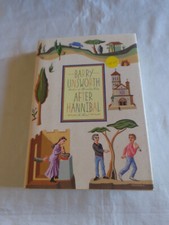
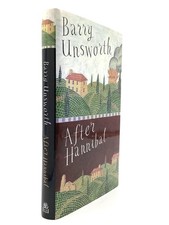
After Hannibal by Barry Unsworth SIGNED 1997 1st/1st Hardcover Brand New!
🇺🇸 Price: US $43.50
Buy It NowSigned By Author is an eBay affiliate. We may earn a commission from qualifying purchases.
About Barry Unsworth
Barry Unsworth was born on 10 August 1930 in Wingate, a coal-mining village in County Durham, the son of a miner who had the good sense and good fortune to reinvent himself as an insurance salesman and drag his family up out of the pit village economy. Unsworth was the first in his family to go to university, reading English at Manchester, and after two years of national service he spent a year in France teaching English before heading south and east, living and teaching in Greece and Turkey through the 1960s. Those Mediterranean years left their mark, giving him a sense of place and a feeling for the layered weight of history that runs through much of what he later wrote.
His first novel, The Partnership, appeared in 1966, and a handful more followed through the 1970s before he found his stride. It was Pascali’s Island (1980), set in the dying days of the Ottoman Empire on a small Aegean island, that marked his arrival as a writer of real distinction, earning his first Booker Prize shortlisting and later being adapted as a film starring Ben Kingsley, Charles Dance, and Helen Mirren. The novel announced a preoccupation that would define his career: the way power operates through deception, and the moral compromises made by those who serve it.
Sacred Hunger, published in 1992, is the book he will always be remembered for. A vast, morally serious novel following the crew of a Liverpool slave ship across the Atlantic in the mid-eighteenth century, it took the mechanics of the slave trade as its subject and used them to examine something more fundamental: the way greed corrupts everything it touches, institutions, families, and the language we use to justify ourselves. It shared the Booker Prize that year with Michael Ondaatje’s The English Patient, a joint award that some felt undersold them both but which neither book has suffered from since. It remains one of the great British historical novels of the twentieth century, and its subject matter has only grown more culturally urgent with time.
Morality Play (1995), a lean and gripping murder mystery set in fourteenth-century England following a troupe of travelling players, was shortlisted for the Booker Prize and later adapted as the film The Reckoning (2004), directed by Paul McGuigan and starring Paul Bettany and Willem Dafoe. The Quality of Mercy (2011), a sequel to Sacred Hunger set in 1767 London, was his final novel, and arrived to warm critical reception when he was already in his eighties. He died in Perugia, Italy, in June 2012, of lung cancer, having spent his last years in the Umbrian countryside he had come to love.
He was a Fellow of the Royal Society of Literature, and held honorary doctorates from Manchester University. His work sits firmly within historical fiction but resists the comforts the genre sometimes offers, preferring moral ambiguity to resolution, and uncomfortable truths to satisfying endings. He once said that the great advantage of writing about the past was the freedom it gave him to say things about the present that were harder to say directly. Sacred Hunger is proof of that claim.
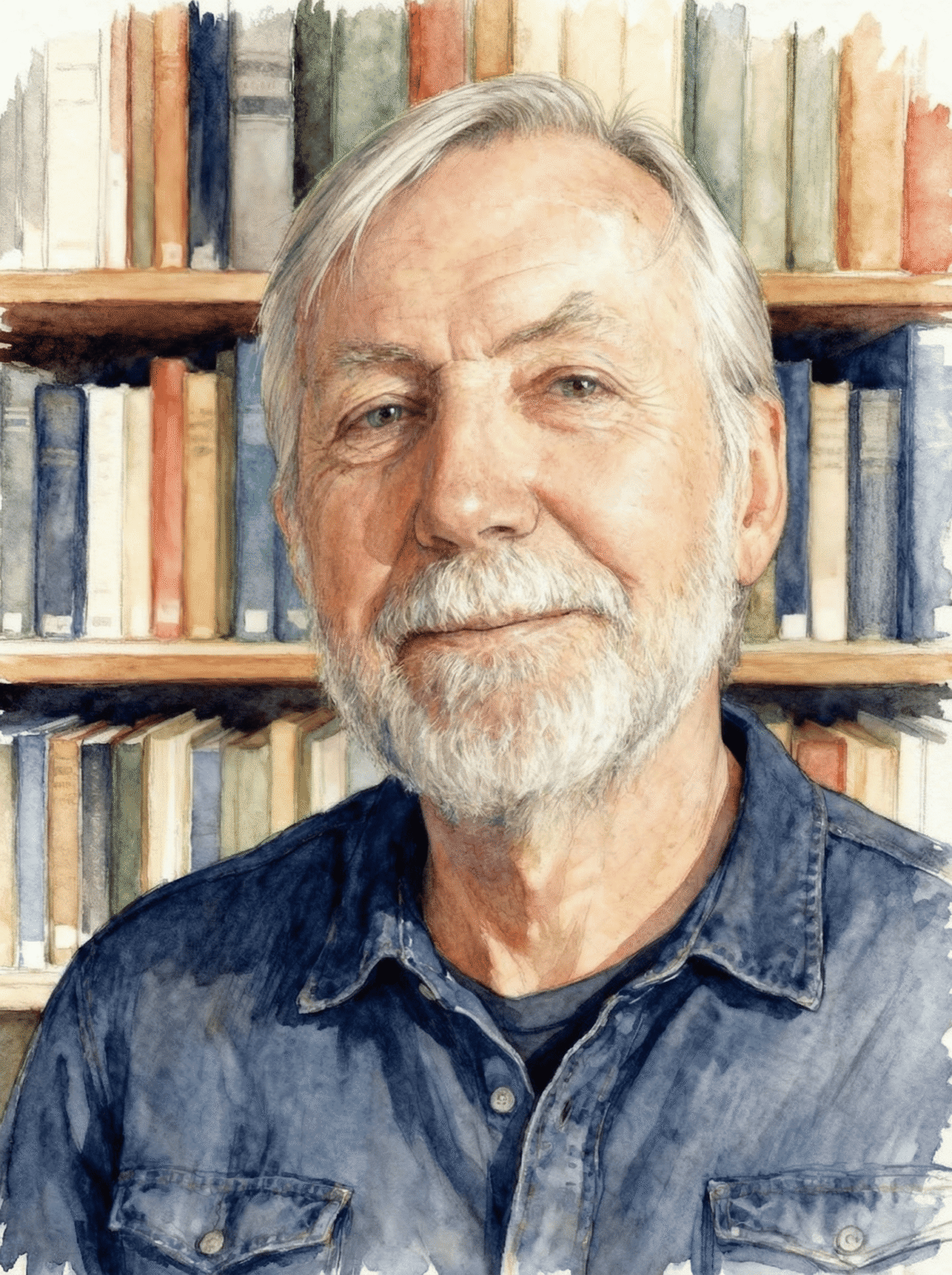
AI-generated illustration of Barry Unsworth for editorial purposes; no endorsement implied.