Lawrence Norfolk signed first editions occupy a genuinely distinctive corner of the British literary collecting market, one that rewards patience and knowledge in equal measure. Winner of the Somerset Maugham Award and named among Granta’s Best of Young British Novelists, Norfolk has produced just four novels in three decades, each one a work of formidable historical and structural ambition. Lemprière’s Dictionary (1991), his debut, drew comparisons to Umberto Eco and Thomas Pynchon and remains the title that commands most collector attention, with true first editions in fine condition increasingly hard to find. For collectors who prize literary seriousness and genuine scarcity over commercial familiarity, Lawrence Norfolk signed first editions are well worth serious attention.


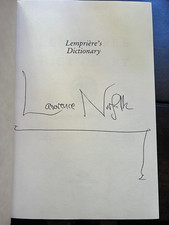
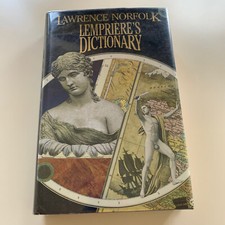
Lawrence Norfolk "Lempriere's Dictionary" First American Edition Signed
🇺🇸 Price: US $20.00
Buy It Now

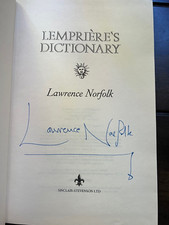


SIGNED John Saturnall’s Feast, Lawrence Norfolk. 2012 1st Edition. Fine
🇺🇸 Price: US $33.58
Buy It Now

Signed By Author is an eBay affiliate. We may earn a commission from qualifying purchases.
About Lawrence Norfolk
Lawrence Norfolk was born in London in 1963, spent his early childhood in Iraq before his family returned to England and settled in the West Country, and read English at King’s College London, graduating in 1986. He worked briefly as a teacher, studied for a PhD, and wrote for reference publishers and literary journals before his first novel announced him to the world in a manner that left critics reaching for comparisons. Malcolm Bradbury called Lemprière’s Dictionary one of the finest novels of the nineties. The Observer declared him just about ahead of everyone in his generation of English novelists. Neither claim was obviously wrong.
Lemprière’s Dictionary, published in 1991, won the Somerset Maugham Award and announced a writer of formidable erudition and structural ambition. Built around the real historical figure of John Lemprière, whose classical dictionary was published in 1788, the novel spirals outward into a labyrinth of myth, murder, colonial intrigue, and conspiracy that takes in the East India Company, the events leading toward the French Revolution, and a shadowy cabal operating across centuries. Critics reached for Umberto Eco and Thomas Pynchon as the nearest points of reference, which tells you something about the register Norfolk was operating in from the very start. It was shortlisted for the Aer Lingus International Fiction Award and became a long-running bestseller in Germany.
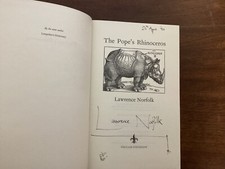
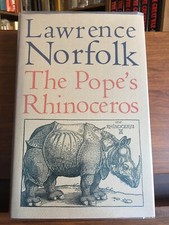
The Pope’s Rhinoceros (1996) went straight into the Sunday Times bestseller list on publication. It takes as its starting point the true story of a rhinoceros shipped from Gujarat to Rome in 1516 as a gift for Pope Leo X, and uses it as the centre of an elaborate Renaissance panorama spanning Baltic herring colonies, West African rainforest, corrupt cardinals, and the geopolitical rivalry between Portugal and Spain. It is a novel of almost reckless ambition, and it confirmed that Lemprière’s Dictionary was no accident. His work has been shortlisted for the IMPAC Prize, the James Tait Black Memorial Award, and the Wingate/Jewish Quarterly Prize for Literature, and his books have been translated into twenty-four languages.
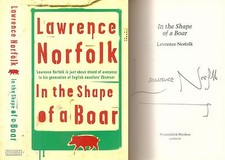
In the Shape of a Boar (2000) operates on a different structural principle, weaving between the ancient Greek myth of the Calydonian boar hunt and the Greek partisan resistance in the final months of the Second World War, bound together by the figure of a Jewish Romanian poet whose account of the war years becomes an international literary sensation. It is a novel about truth, testimony, and the stories survivors tell, and it was shortlisted for the James Tait Black Memorial Prize.
John Saturnall’s Feast (2012), his fourth and most recent novel, is a departure in tone if not in historical ambition, a rich and sensuous story of a kitchen boy who rises to become the greatest cook of his generation in seventeenth-century England, set against the backdrop of civil war and religious conflict. Vanity Fair called it an enthralling tale with sumptuous recipes and intoxicatingly gorgeous illustrations. It demonstrated that Norfolk could write with warmth as well as intellectual ferocity, and it brought him a new generation of readers.
In 1992 he was listed as one of Granta magazine’s 20 Best of Young British Novelists, alongside names that include Kazuo Ishiguro, Jeanette Winterson, and Alan Hollinghurst. He has published only four novels in thirty years, which is either a mark of extraordinary fastidiousness or proof that books of this density simply cannot be rushed. Possibly both. His place in contemporary historical fiction is that of the writer other writers read, the one whose ambition sets a standard even if his readership has never quite matched his critical reputation.
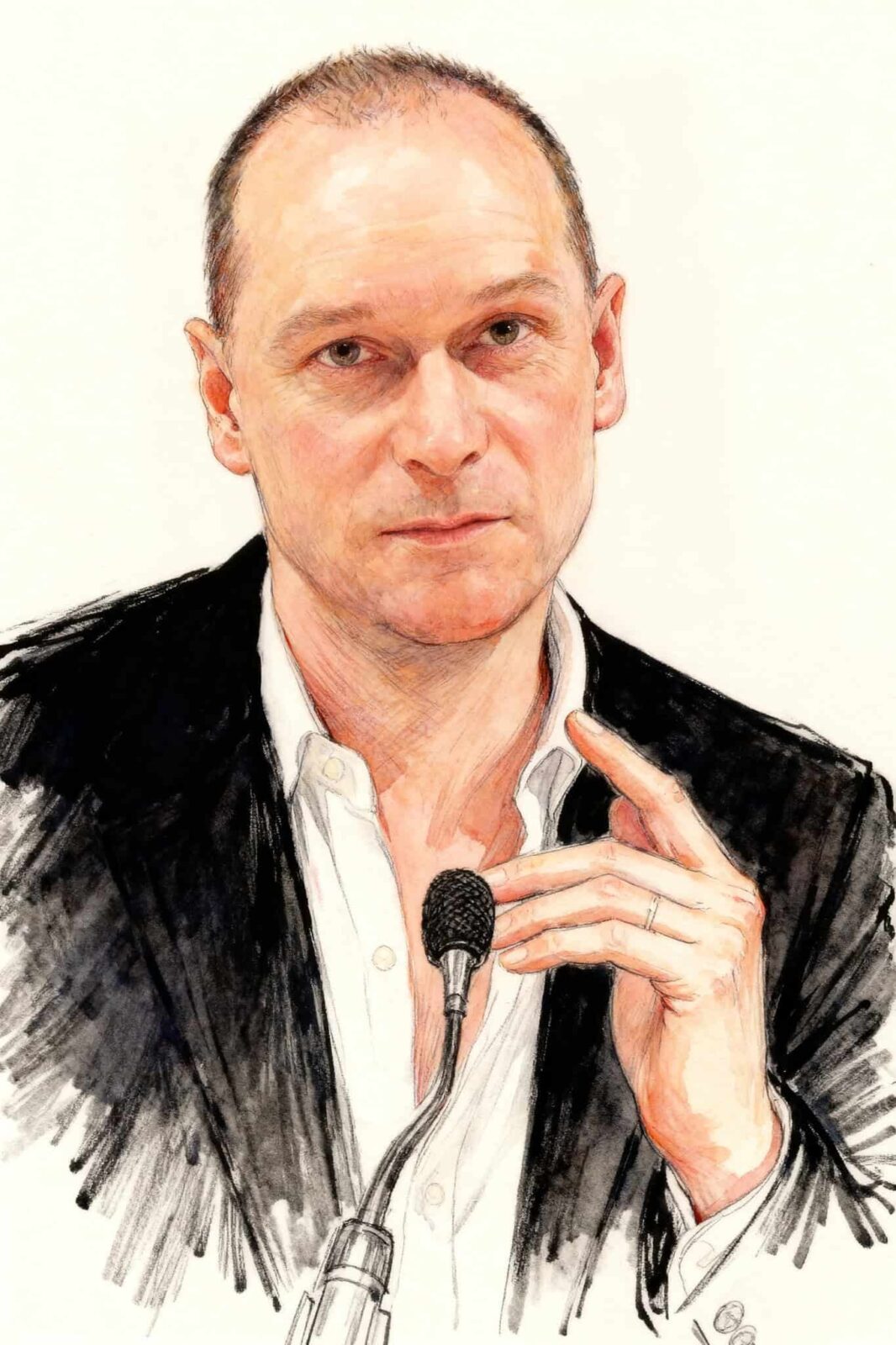
Illustration of Lawrence Norfolk based on a photograph by Wolfgang H. Wögerer, Vienna, Austria, CC BY-SA 3.0, via Wikimedia Commons.
