Sarah Dunant signed first editions occupy a distinctive place in the British historical fiction collecting market, combining popular appeal with genuine literary and scholarly seriousness. Best known for her Italian Renaissance novels, particularly The Birth of Venus (2003), a New York Times bestseller translated into thirty languages, and Sacred Hearts (2009), shortlisted for the inaugural Walter Scott Prize for Historical Fiction, Dunant is an author whose readership is both broad and loyal. A CWA Silver Dagger winner, Fellow of the Royal Society of Literature, and one of the most knowledgeable writers working in Renaissance history, her early first editions are becoming increasingly hard to find in fine condition. With The Marchesa published in 2025 keeping her name firmly in the conversation, Sarah Dunant signed first editions are a name every collector should know.


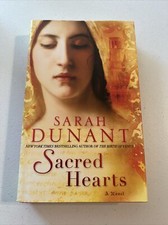




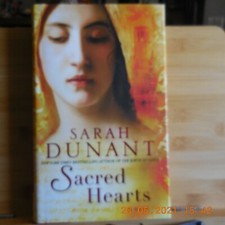
Dunant, Sarah - Sacred Hearts - Signed - First Edition - As New condition
🇺🇸 Price: US $15.00
Buy It Now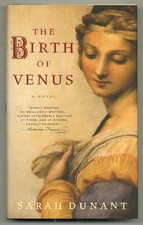
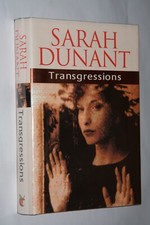
TRANSGRESSIONS by Sarah Dunant First Edition HC SIGNED (1997) UK Edition
🇺🇸 Price: US $14.55
Buy It Now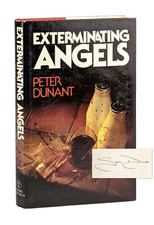




SIGNED In the Company of the Courtesan by Sarah Dunant (2006, Hardcover)
🇺🇸 Price: US $15.00
Buy It Now
Signed By Author is an eBay affiliate. We may earn a commission from qualifying purchases.
About Sarah Dunant
Sarah Dunant was born in London in 1950, the daughter of a British Airways manager and his French wife, and grew up with a strong sense that the world was considerably larger than her corner of West London. She read History at Newnham College, Cambridge, earned an actor’s equity card after graduating, taught English in Tokyo, and worked her way home through Southeast Asia before settling into a career that managed to encompass BBC radio production, television presenting, journalism, and eventually fiction. She was the presenter of BBC Two’s The Late Show through much of the 1990s, one of the most prominent arts programmes on British television, and hosted Woman’s Hour on Radio 4, which gave her a public profile that most novelists can only dream about. None of it, in the end, was quite as interesting as the novels.
She began writing in her late twenties, initially collaborating with a friend on political thrillers before going solo with Snowstorms in a Hot Climate in 1988. Through the early 1990s she developed a series of crime novels around Hannah Wolfe, a sharp, self-reliant British female private investigator whose cases touched on surrogacy, cosmetic surgery, animal rights, and violence against women. The series was shortlisted three times for the CWA Gold Dagger, and Fatlands won the CWA Silver Dagger in 1994. They are pacey, intelligent, and very much of their moment.
But it was a visit to Florence in 2000 that changed everything. Dunant went to Italy in something she has described as a midlife crisis, and came back with a new vocation. The result was The Birth of Venus, published in 2003, a novel set in Florence in the 1490s following a merchant’s daughter with a passion for painting as the city convulses under the influence of Savonarola. It became a New York Times bestseller and was translated into thirty languages, establishing her as one of the foremost writers of Renaissance historical fiction working in English. In the Company of the Courtesan (2006) and Sacred Hearts (2009) completed an informal trilogy, the latter shortlisted for the inaugural Walter Scott Prize for Historical Fiction in 2010.
Her Borgias novels, Blood and Beauty (2013) and In the Name of the Family (2017), took her into the high drama of papal politics and Machiavellian intrigue, with Niccolò Machiavelli himself appearing as a key figure in the second volume. Her most recent work, The Marchesa (2025), is an illustrated novel centred on Isabella d’Este, the great Renaissance patron and one of the most powerful women of the fifteenth century, accompanied by a five-part BBC Radio 4 series. It is a reminder that Dunant’s relationship with the Italian Renaissance is not a phase but a life’s work, pursued with a scholar’s rigour and a storyteller’s instinct for what makes history vivid and immediate.
She was elected a Fellow of the Royal Society of Literature in 2024, and holds an honorary doctorate from Oxford Brookes University. Her books have been translated into more than thirty languages and her readership spans academic historians and popular fiction audiences in roughly equal measure, which is a harder balance to strike than it sounds.
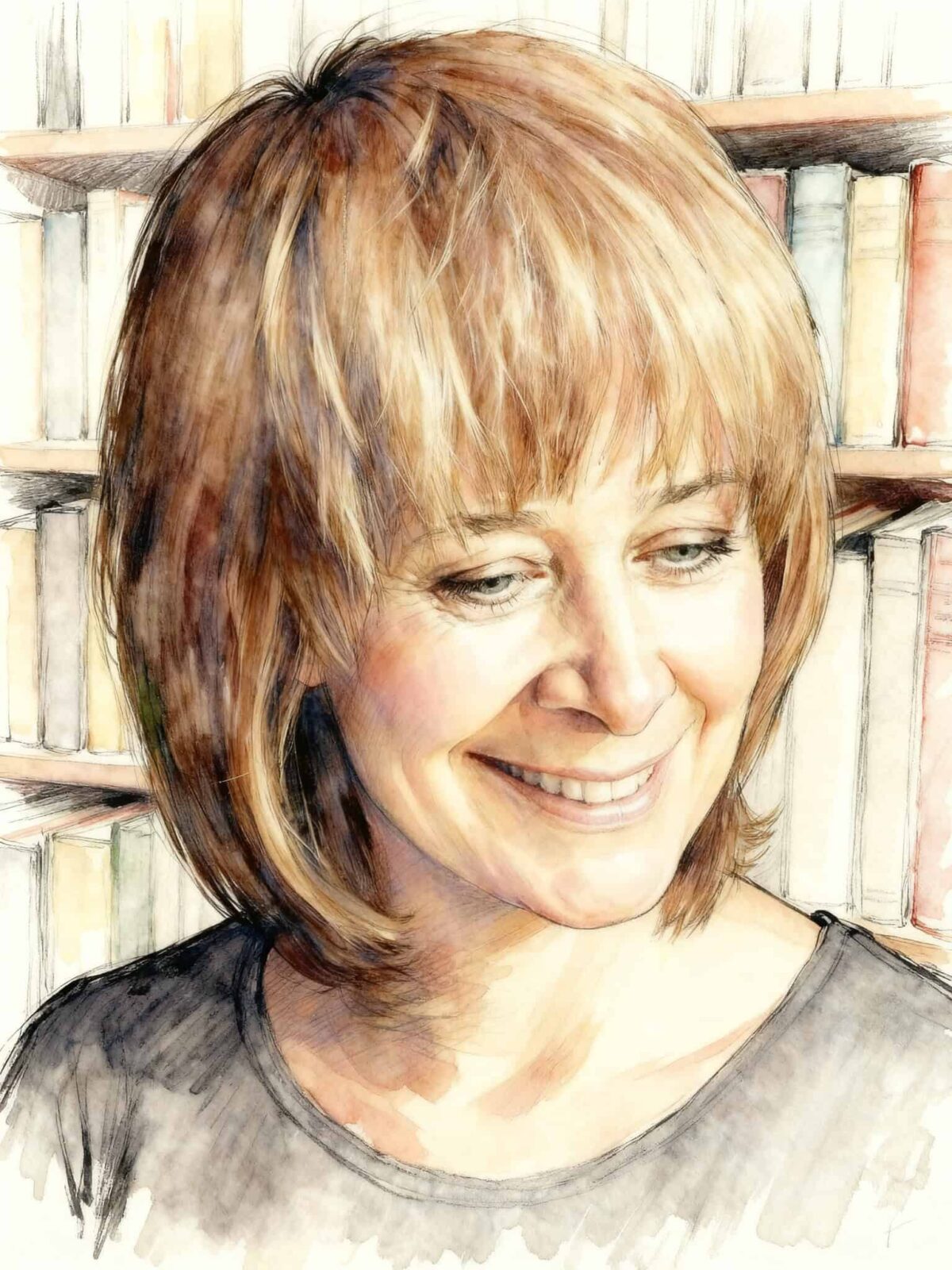
AI-generated illustration of Sarah Dunant for editorial purposes; no endorsement implied.