Sebastian Faulks signed first editions occupy a well-established place in the British literary collecting market, and interest in them has held firm. His French Trilogy, particularly Birdsong (1993) and Charlotte Gray (1998), consistently attracts collector attention, and true first editions of Birdsong, a novel that has never been out of cultural circulation since publication, are becoming genuinely hard to find in fine condition with dust jackets. A CBE and Fellow of the Royal Society of Literature, Faulks has the kind of literary standing that gives his early books lasting value. With the BBC television adaptation of Birdsong having introduced him to a new generation of readers, and his backlist continuing to sell steadily, Sebastian Faulks signed first editions remain a well-grounded choice for collectors with an eye on the long term.

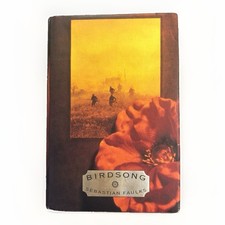
Birdsong Sebastian Faulks 1996 First US Edition 1st Printing Hardcover DJ
🇺🇸 Price: US $24.99
Buy It Now


Signed By Author is an eBay affiliate. We may earn a commission from qualifying purchases.
← Back to full listingsAbout Sebastian Faulks
Sebastian Faulks was born in Donnington, Berkshire, in 1953, the son of a solicitor who had won the Military Cross in the Second World War. That family history, soldiers and sacrifice and the long shadow of conflict, runs quietly through much of what he has written since. He was educated at Wellington College and read English at Emmanuel College, Cambridge, before spending fourteen years as a journalist, first at the Daily and Sunday Telegraph, then as the first literary editor of The Independent. He quit journalism in 1991, after the success of his second novel, and hasn’t looked back.
His first book, A Trick of the Light, appeared in 1984, but it was The Girl at the Lion d’Or, published in 1989, that announced what he was really capable of. Set in 1930s France, it was the opening volume of what became known as the French Trilogy, three novels linked by period, by place, and by the weight of European history pressing down on individual lives. The second, Birdsong (1993), is the one most people know. A love story set against the trenches of the First World War, it is a novel that people press on strangers, that school curricula return to repeatedly, that has never really gone out of fashion since the day it was published. In 1995 it won Faulks the British Book Award for Author of the Year, and a television and bookshop poll among British readers placed it among their fifty best-loved books of the century. Charlotte Gray (1998), the third volume, returned to wartime France and the French Resistance, and was shortlisted for the James Tait Black Memorial Prize.
His range extends well beyond the French Trilogy. Human Traces (2005), a long and ambitious novel about the early history of psychiatry set partly in Austria, demonstrated that he could sustain something far more intellectually complex than a war romance. Engleby (2007) was a psychological portrait of a disturbing kind, narrated by an unreliable and quietly menacing Cambridge student. In 2008 he wrote Devil May Care, an official James Bond continuation novel commissioned by the Ian Fleming estate, and in 2013 he took on P.G. Wodehouse with Jeeves and the Wedding Bells, two exercises in very different registers that showed the breadth of his literary interests. His most recent novels, Paris Echo (2018) and Snow Country (2021), have continued to attract serious critical attention.
His most recent novels show no narrowing of ambition. The Seventh Son (2024), a Sunday Times instant bestseller, is a near-future speculative fiction set between 2030 and 2056, following a child born of a clandestine genetic experiment and the consequences that ripple outward as he grows into adulthood. It is a departure in setting but not in preoccupation, the nature of consciousness and what it means to be human are concerns that have run through his work from Human Traces onwards. In 2025 he published Fires Which Burned Brightly, subtitled Ten Essays in Place of a Memoir, a characteristically sidelong approach to autobiography that takes in a post-war rural childhood, Fleet Street in its boozy heyday, the writing of Birdsong in his brother’s spare room, and the anxious delirium of American book tours. A new novel, Farewell to Eden, is expected in 2026.
The adaptations have helped keep the books in the public eye. Charlotte Gray was made into a film in 2001, directed by Gillian Armstrong and starring Cate Blanchett. Birdsong was adapted as a BBC two-part television serial in 2012, starring Eddie Redmayne, and a stage version toured the country across several years. These productions introduced Faulks to audiences who might not otherwise have found him, and the novels tend to benefit each time.
He was appointed CBE for services to literature in 2002, and elected a Fellow of the Royal Society of Literature in 1993. His place in contemporary historical fiction is entirely secure, and the weight of his backlist is considerable.
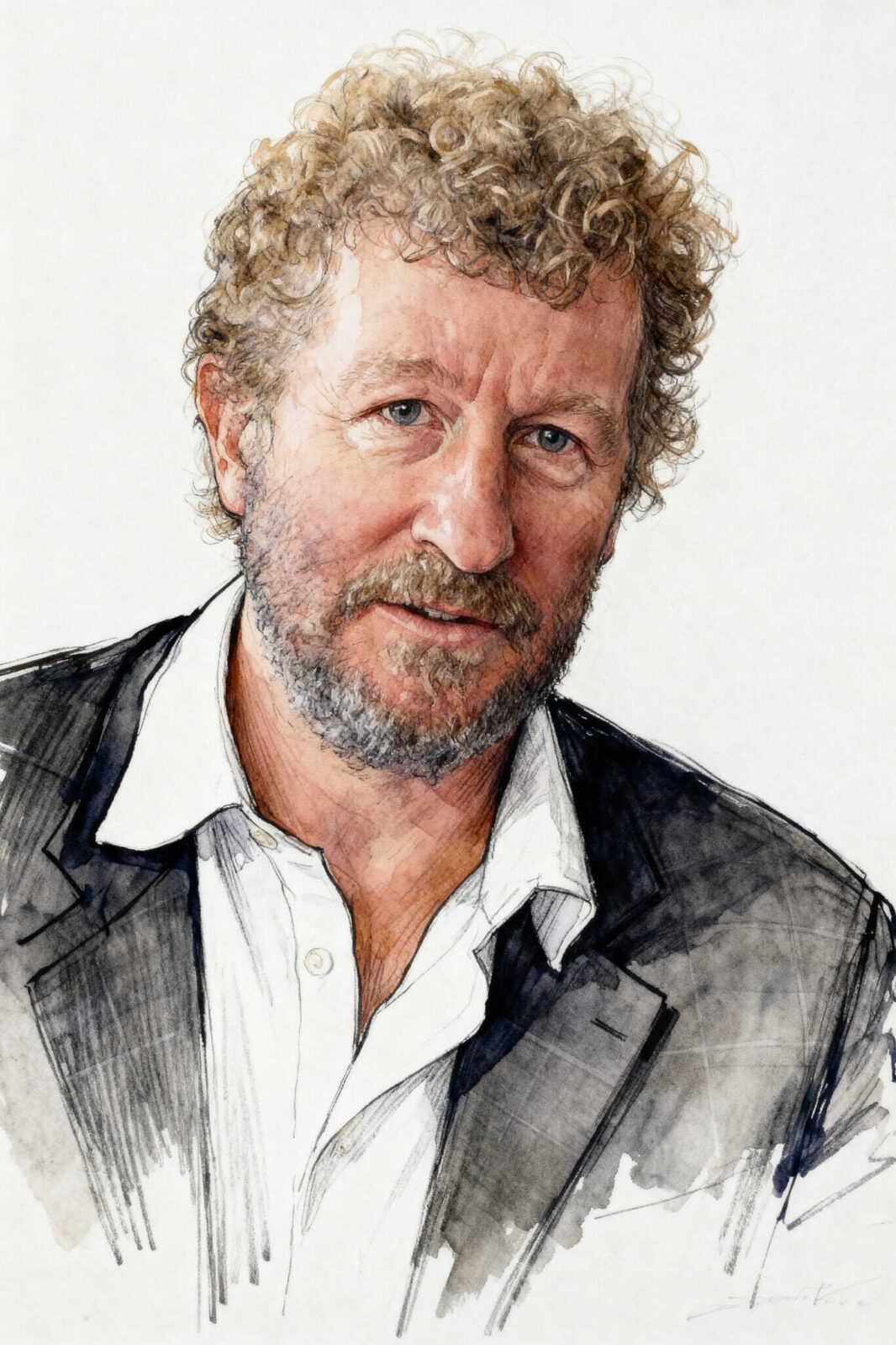
Illustration of Sebastian Faulks based on a photograph by Elena Torre, CC BY-SA 2.0, via Wikimedia Commons.
