Richard Matheson signed first editions occupy an important place in the history of modern horror and science fiction collecting. I Am Legend (1954) is the obvious prize, a landmark novel whose influence reaches from vampire fiction into the modern post-apocalyptic and zombie genres, and which has been filmed three times. The Shrinking Man (1956) is another key early edition, while Hell House (1971) remains a favourite among collectors of supernatural horror. A Bram Stoker Lifetime Achievement recipient and a major influence on Stephen King, Matheson’s early signed books are increasingly difficult to find in fine condition. For serious collectors, he is one of the essential names.

Richard Matheson / Link Signed First Edition Collector's Set w/ Signed
🇺🇸 Price: US $303.00
Buy It Now

7 Steps to Midnight by Richard Matheson - Signed First Edition 1st/1st
🇺🇸 Price: US $66.50
Buy It Now

I Am Legend RICHARD MATHESON Signed First Hardcover Edition 1st 1970 Review Copy
🇺🇸 Price: US $3,000.00
Buy It Now
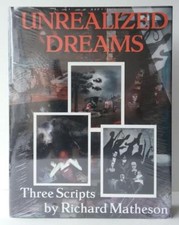
Unrealized Dreams by Richard Matheson (First Edition) Limited Signed Sealed
🇺🇸 Price: US $150.00
Buy It Now


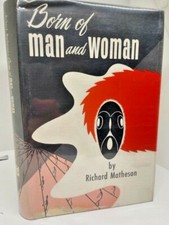
Woman by Richard Matheson (First Edition) LTD Hinged Wood Box Signed Copy "X"
🇺🇸 Price: US $500.00
Buy It Now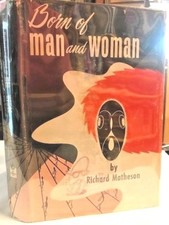
Signed By Author is an eBay affiliate. We may earn a commission from qualifying purchases.
About Richard Matheson
Richard Burton Matheson was born on 20 February 1926 in Allendale, New Jersey. He served in the U.S. Army during the Second World War before studying journalism at the University of Missouri, and began publishing short stories in the pulp magazines of the early 1950s. He was part of a generation of writers who helped push genre fiction somewhere new, bringing horror and the fantastic into settings that looked remarkably like the world their readers actually lived in. Matheson was particularly good at making the familiar feel suddenly unsafe.
He married Ruth Ann Woodson in 1952, and they had four children. Two of them, Richard Christian and Chris, later became writers themselves.
Matheson’s breakthrough came with I Am Legend in 1954, one of those novels whose influence is perhaps easier to see now than it was when the book first appeared. Its protagonist is the last surviving human in a world where a plague has transformed everyone else into vampiric creatures. The premise has been revisited repeatedly, but Matheson’s version remains distinctive. It has been filmed three times – The Last Man on Earth (1964), The Omega Man (1971) and I Am Legend (2007), starring Will Smith – and its influence on the modern zombie, vampire and post-apocalyptic traditions is hard to overstate.
He followed it with The Shrinking Man (1956), the story of a man who begins to shrink after exposure to radioactive contamination. Matheson adapted the novel himself for the screen as The Incredible Shrinking Man, now regarded as a classic of science fiction cinema. The film was important enough within the field to earn a Hugo Award, and the story has continued to attract filmmakers, with another adaptation reaching French cinemas in 2025. A Stir of Echoes (1958) and Hell House (1971) strengthened Matheson’s reputation as a writer of psychological and supernatural horror, while Bid Time Return (1975) provided the basis for the romantic time-travel film Somewhere in Time.
His work in television was just as significant. Matheson wrote fourteen episodes of the original Twilight Zone, including the much-loved ‘Nightmare at 20,000 Feet’, and adapted several Edgar Allan Poe stories for Roger Corman in the early 1960s. His short story ‘Duel’ became Steven Spielberg’s first feature-length film, made for television in 1971. Matheson later won an Edgar Award from the Mystery Writers of America for his teleplay The Night Stalker.
His influence on other writers is equally important. Stephen King has repeatedly cited Matheson as a major early influence, particularly for the idea that horror did not need to happen in some distant Gothic castle. It could happen in a suburban house, on a familiar street, to an ordinary person. That simple shift helped change the shape of American horror for decades to come.
The honours accumulated over the years. Matheson was named a Grand Master of Horror by the World Horror Convention, received the World Fantasy Award for Life Achievement in 1984 and the Bram Stoker Award for Lifetime Achievement in 1991. In 2010 he was inducted into the Science Fiction Hall of Fame, an indication of just how comfortably his work sits between horror and science fiction. He kept writing into his eighties, with Other Kingdoms appearing in 2011.
Matheson died at his home in Calabasas, California, on 23 June 2013, aged eighty-seven. Ray Bradbury once described him as one of the most important writers of the twentieth century. It sounds like a grand claim, but Matheson’s subsequent influence makes it difficult to dismiss. I Am Legend alone has generated generations of imitators and adaptations, while his wider body of work continues to turn up in the reading lists and interviews of writers who came after him. Nearly seventy years after his breakthrough, Matheson’s particular talent for putting the extraordinary into ordinary places still feels remarkably fresh.
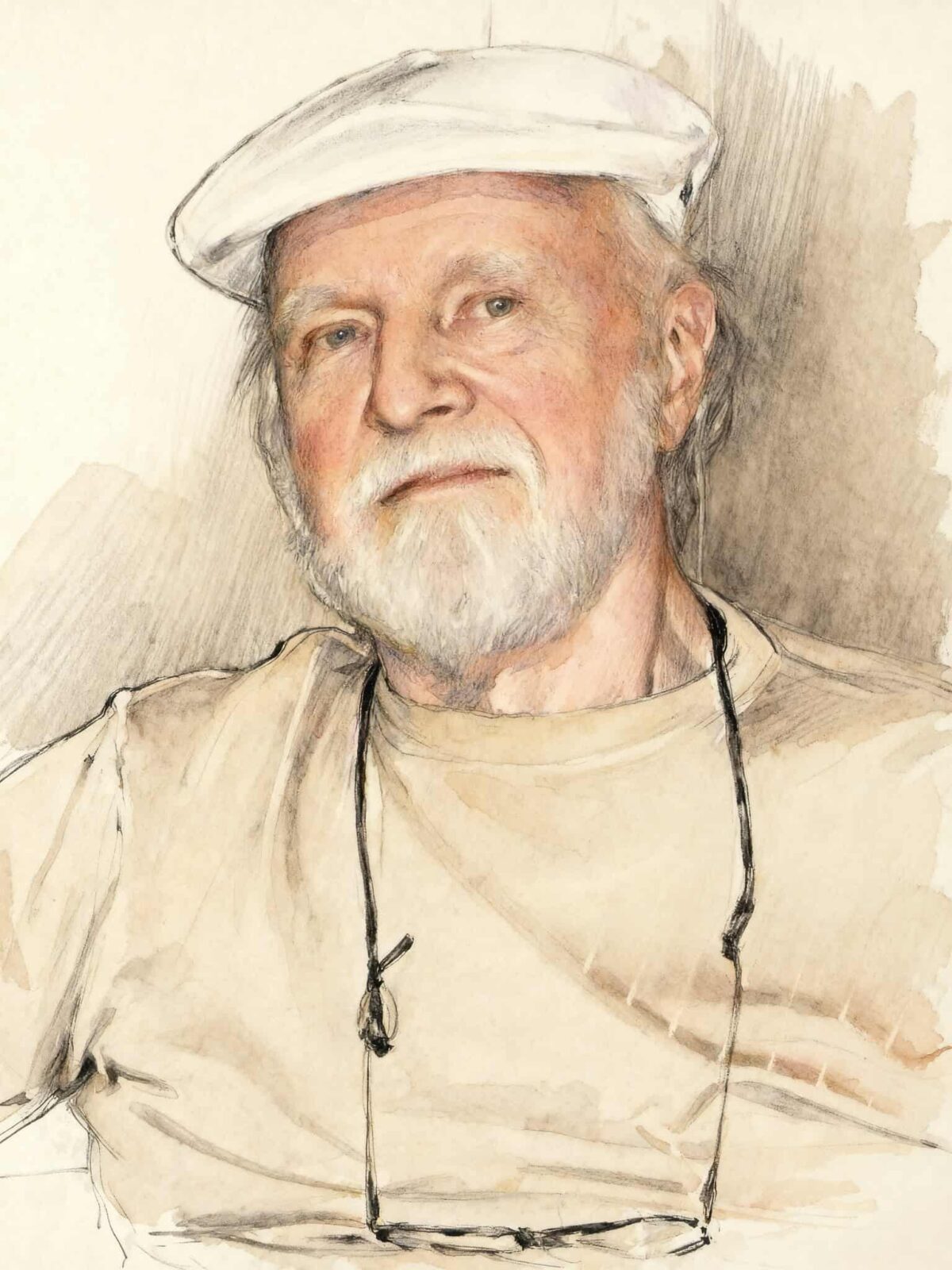
Illustration of Richard Matheson based on a photograph by JaSunni at PicasaWeb, CC BY-SA 3.0, via Wikimedia Commons.
