If you’re interested in Haruki Murakami signed first editions, this curated selection focuses on scarce and notable examples from one of the most influential voices in modern literary fiction. It includes early Japanese printings alongside key English-language first editions, chosen for their relevance and long-term interest to collectors. Whether you are developing a contemporary literature collection or looking for a single representative work, these signed first editions offer a tangible connection to writing known for its surreal elements, emotional restraint, and international reach. The selection provides a way to engage with Murakami’s work through books that carry both literary and cultural significance.


SIGNED Haruki Murakami First Person Singular HC US 1st/1st New & Unused
🇺🇸 Price: US $440.00
Buy It Now
HARUKI MURAKAMI THE CITY and ITS UNCERTAIN WALLS DELUXE SIGNED LTD EDITION 52/80
🇺🇸 Price: US $3,897.85
Buy It Now
Haruki Murakami Kafka on the Shore SIGNED Ltd Ed 1/1000 Harvill 2005 MINT
🇺🇸 Price: US $738.71
Buy It Now


Dance Dance Dance ~ SIGNED by HARUKI MURAKAMI ~ First American Edition 1st 1994
🇺🇸 Price: US $1,750.00
Buy It Now

The Wind-Up Bird Chronicle ~ by HARUKI MURAKAMI ~ Signed First Edition ~ 1997
🇺🇸 Price: US $4,500.00
Buy It Now

City and Its Uncertain Walls ~ HARUKI MURAKAMI Signed Limited First Edition 2024
🇺🇸 Price: US $4,500.00
Buy It Now
The Wind-Up Bird Chronicle ~ SIGNED by HARUKI MURAKAMI ~ First Edition ~ 1998
🇺🇸 Price: US $1,750.00
Buy It Now
Haruki Murakami / Colorless Tsukuru Tazaki and his Years Limited Signed 1st 2014
🇺🇸 Price: US $4,600.00
Buy It Now
The Wind-Up Bird Chronicle ~ SIGNED by HARUKI MURAKAMI ~ First Edition 1st 1997
🇺🇸 Price: US $4,800.00
Buy It Now
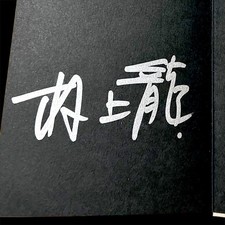
Ryu Murakami SIGNED Book Selected Novels Vol. 2 Japanese Novel Autograph
🇺🇸 Price: US $89.40
Buy It Now
Signed By Author is an eBay affiliate. We may earn a commission from qualifying purchases.
About Haruki Murakami
Haruki Murakami, born in Kyoto in 1949 and raised in Kobe, is one of the most influential and internationally acclaimed Japanese writers of the late twentieth and early twenty-first centuries. After studying drama at Waseda University in Tokyo, he opened a small jazz bar with his wife, an experience that shaped the atmosphere, rhythm, and cultural references of his later writing. Murakami famously decided to become a novelist while watching a baseball game, and his debut, Hear the Wind Sing (1979), introduced a cool, introspective narrative voice that felt strikingly different from the prevailing trends in Japanese literature.
His early fiction, including Pinball, 1973 (1980) and A Wild Sheep Chase (1982), formed a loose trilogy sometimes known as the “Rat” novels, blending pop culture, existential longing, and surreal elements. These works established Murakami’s signature style, in which the mundane coexists with the uncanny, and ordinary characters drift into dreamlike parallel realities. International recognition grew with Norwegian Wood (1987), a poignant, realistic coming-of-age story that became a phenomenon in Japan and revealed his ability to write with emotional clarity as well as imaginative boldness.
With novels such as Hard-Boiled Wonderland and the End of the World (1985), The Wind-Up Bird Chronicle (1994), and Kafka on the Shore (2002), Murakami deepened his exploration of memory, identity, and the mysterious forces shaping human experience. His narratives often open quiet doorways into parallel dimensions, where cats may speak, music becomes a portal, and lost objects or vanished people carry symbolic weight. These books helped redefine Modern Literary Fiction for a global audience, influencing countless writers and gaining devoted readers who return to his work for its mixture of melancholy, humour, and metaphysical wonder.
Murakami is also a prolific nonfiction writer. Underground (1997) offered a powerful, interview-based account of the Tokyo subway sarin attacks, while What I Talk About When I Talk About Running (2007) reflected on creativity and endurance through his long-distance running practice. His essays and memoiristic writings reveal a quieter, more direct voice, often focused on discipline, solitude, and the rituals that sustain his work.
Later novels such as 1Q84 (2009–2010), Colorless Tsukuru Tazaki and His Years of Pilgrimage (2013), and Killing Commendatore (2017) continued to expand his imaginative universe, while Novelist as a Vocation (2015) provided insight into his creative process. Murakami’s unique blend of clarity, strangeness, and emotional resonance has earned him major literary awards and a near-mythic status among contemporary authors.
Today, Haruki Murakami remains a defining figure in modern literature, with first editions and signed copies prized by collectors for their blend of literary significance, cultural impact, and enduring global appeal.
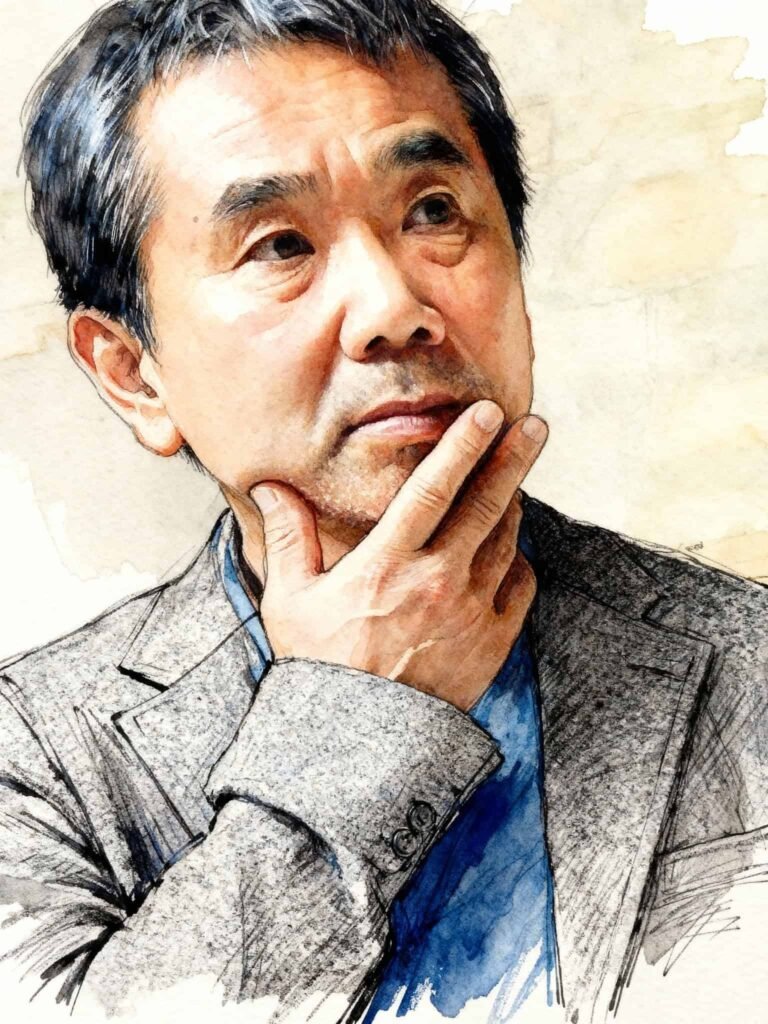
Illustration of Haruki Murakami based on a photograph by Haruki Murakami (signature), CC BY-SA 4.0, via Wikimedia Commons.
