The market for Italo Calvino signed first editions is a small and discerning one, and for good reason: signed copies of any of his books are genuinely rare outside Italy. A Feltrinelli Prize recipient, a Legion of Honour awardee, and one of the most influential European novelists of the twentieth century, Calvino’s reputation has only grown in the decades since his death. Invisible Cities (1972) and If on a Winter’s Night a Traveller (1979) are the titles that collectors pursue most keenly, and fine copies with dust jackets are hard to come by. For anyone building a serious collection in literary fiction, Calvino is well worth serious attention.

The Baron in the Trees ~ SIGNED by ITALO CALVINO ~ First US Edition 1959 ~ 1st
🇺🇸 Price: US $2,500.00
Buy It Now
John Ross Signed Limited Ed 1993 Visible Cities Italo Calvino High Tide Press
🇺🇸 Price: US $1,250.00
Buy It Now
italo calvino / if on a winter's night a traveler Signed 1st Edition 1981
🇺🇸 Price: US $2,750.00
Buy It Now
Italo CALVINO / The Path to the Nest of Spiders Signed 1st Edition 1956
🇺🇸 Price: US $650.00
Buy It NowSigned By Author is an eBay affiliate. We may earn a commission from qualifying purchases.
About Italo Calvino
Italo Calvino was born in Santiago de las Vegas, Cuba, in October 1923, the son of two Italian botanists who had settled there temporarily. The family returned to Italy when he was two, and he grew up in San Remo on the Ligurian coast, where his parents’ scientific world, the sea, and the surrounding landscape all quietly fed an imagination that would eventually refuse any obvious boundaries. He studied agriculture at the University of Turin, partly to please his family, then abandoned it when the war arrived and everything changed.
In 1944, he joined the Italian Resistance, a decision that put his parents at considerable risk, and which shaped the political and moral sensibility behind his earliest writing. After the war he completed a degree in literature, joined the Communist Party, and began a long association with the Einaudi publishing house in Turin, where he worked as an editor and reader for most of his adult life, helping to shape Italian literary culture even as he was contributing to it.
His first novel, The Path to the Nest of Spiders (1947), drew directly on his experience of the Resistance, and was warmly received. But realism, it turned out, was only ever a starting point. By the early 1950s Calvino had turned towards something harder to categorise: fable, fantasy, philosophical game, and allegory by turns. The three novels that make up the Our Ancestors trilogy, published between 1952 and 1959, brought him his first major prizes and established a reputation for fiction that operated simultaneously as adventure story and intellectual provocation.
He resigned from the Communist Party in 1957, following the Soviet invasion of Hungary, and spent much of the next two decades in Paris, where he became a member of Oulipo, the experimental writers’ collective founded by Raymond Queneau. The association deepened his interest in structure, constraint, and the generative possibilities of form, all of which fed into the work that would make him internationally famous. Invisible Cities (1972) takes the form of an imaginary dialogue between Marco Polo and Kublai Khan, in which Polo describes fifty-five fantastical cities, each one a meditation on memory, desire, language, or loss. It is a work of literary fiction that reads unlike anything else, and it remains his most widely read and taught book. If on a Winter’s Night a Traveller (1979) pushed still further, making the reader a character in the narrative itself, a formally daring move that still feels startling.
The prizes accumulated: the Viareggio Prize, the Feltrinelli Prize for his body of work, the Austrian State Prize for European Literature, and the Legion of Honour from France. He had been widely considered a serious Nobel Prize candidate in the years before his death. At the time of his death, in September 1985, from a cerebral haemorrhage, he was preparing a series of lectures for Harvard. Those lectures were published posthumously as Six Memos for the Next Millennium, a short, brilliant book about what literature is for, that has become required reading for writers and students of fiction the world over.
Gore Vidal, not given to easy praise, called him the only great writer of his time. His work has been translated into dozens of languages and has never stopped finding new readers. Signed copies of any of his books are uncommon in the English-speaking market, and early editions of the key works are genuinely scarce.
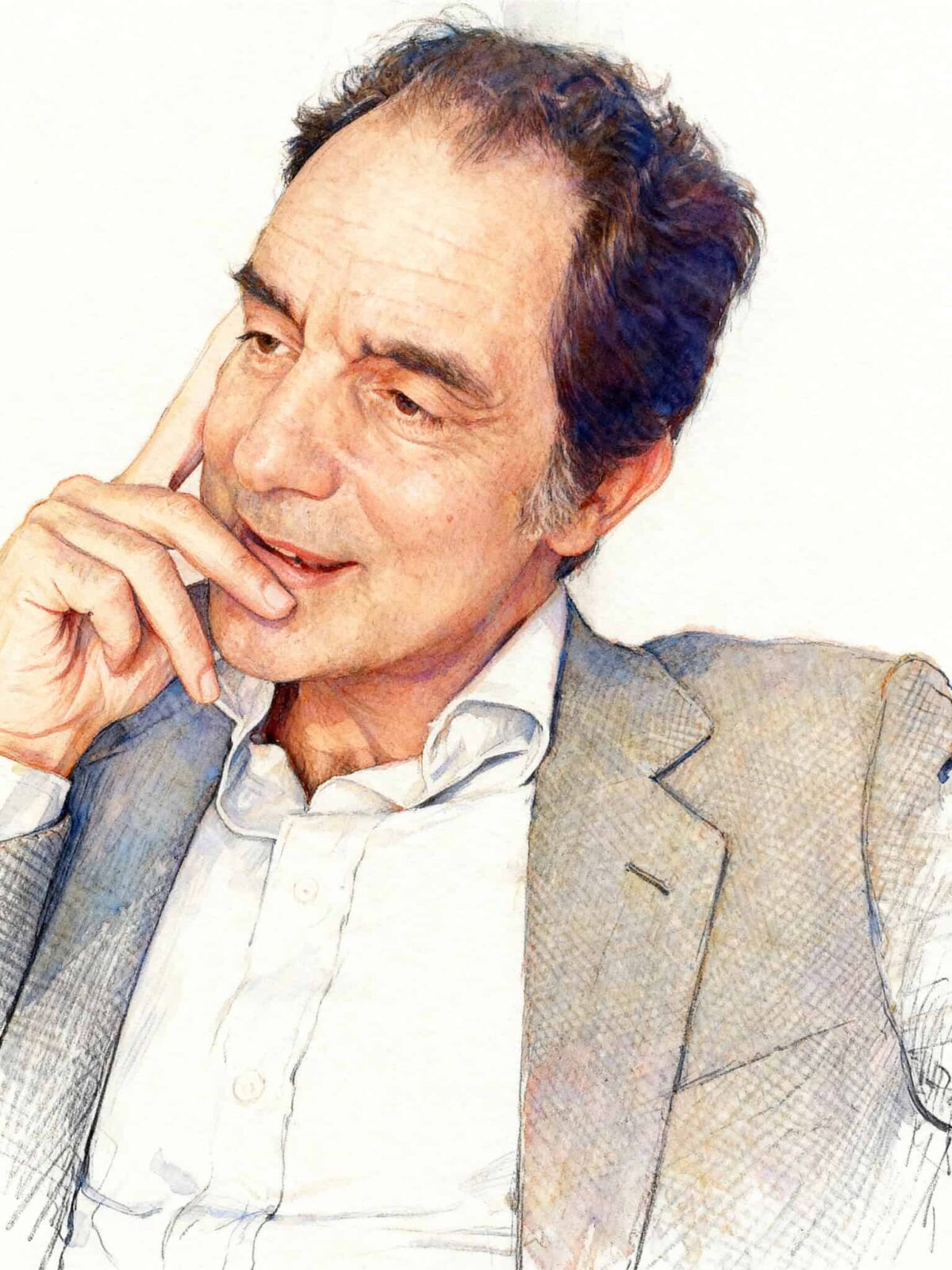
Illustration of Italo Calvino based on a photograph: The original uploader was Varie11 at Italian Wikipedia., Public domain, via Wikimedia Commons.
