
Explore our curated selection of José Saramago signed first editions, chosen for readers and collectors who value bold, imaginative fiction. We highlight notable early printings, rare signed copies and collectible editions spanning Saramago’s celebrated career, from allegorical masterpieces like Blindness to his later philosophical works. We monitor the market closely to feature listings that stand out for condition, authenticity and long-term collectability. Whether you are expanding an existing library or seeking a single special volume, our selection offers compelling opportunities for admirers of one of Europe’s most distinctive literary voices.
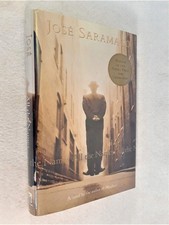


Jose Saramago Baltasar and Blimunda SIGNED First Edition HCDJ 1987 Nobel Prize
🇺🇸 Price: US $600.00
Buy It Now


Nobelist JOSE SARAMAGO "The Double" (2004) SIGNED First Printing QUITE RARE
🇺🇸 Price: US $350.00
Buy It Now
José Saramago / THE HISTORY OF THE SIEGE OF LISBON Signed 1st ed 1996
🇺🇸 Price: US $250.00
Buy It Now
Nobel Prize Winner JOSE SARAMAGO "The Cave" SIGNED Uncorrected Proof VERY RARE
🇺🇸 Price: US $300.00
Buy It Now
JOSE SARAMAGO "Baltasar and Blimunda" SIGNED 1st Edition QUITE RARE Nobel Prize
🇺🇸 Price: US $1,400.00
Buy It Now


José Saramago, Giovanni Pontiero / STONE RAFT Signed 1st Edition 1995
🇺🇸 Price: US $350.00
Buy It Now
José Saramago / TALE OF THE UNKNOWN ISLAND Signed by Illustrator 1st
🇺🇸 Price: US $200.00
Buy It Now
José Saramago / TALE OF THE UNKNOWN ISLAND Signed by Illustrator 1st
🇺🇸 Price: US $400.00
Buy It Now
José Saramago, Margaret Jull Costa / ALL THE NAMES Signed 1st ed 1999
🇺🇸 Price: US $300.00
Buy It Now
José Saramago, Margaret Jull Costa / ALL THE NAMES Signed 1st ed 1999
🇺🇸 Price: US $300.00
Buy It NowSigned By Author is an eBay affiliate. We may earn a commission from qualifying purchases.
About José Saramago
José Saramago, born in 1922 in Azinhaga, Portugal, rose from modest rural beginnings to become one of the most distinctive and internationally acclaimed voices of contemporary literature. After working as a mechanic, translator and journalist, he gradually established himself as a novelist of remarkable originality. His breakthrough came with Levantado do Chão, a work that refined the long, fluid sentences and ironic tone that would become hallmarks of his style. Saramago’s bold narrative experiments and philosophical depth positioned him within modern literary fiction, yet his work stands apart for its fusion of political critique, allegory and darkly comic humanism.
Saramago achieved worldwide fame with Blindness, a haunting allegory in which an unexplained epidemic of sightlessness exposes the fragility of social order. Its companion novel, Seeing, continued this exploration of power and collective responsibility. Other landmark works include The Gospel According to Jesus Christ, which provoked considerable controversy for its unorthodox depiction of religious tradition, and Baltasar and Blimunda, a richly imaginative love story set against the backdrop of eighteenth-century Portugal. His willingness to challenge authority and question official narratives is evident throughout his novels, essays and public interventions.
In 1998 Saramago became the first Portuguese-language writer to receive the Nobel Prize in Literature. The Nobel Committee praised his ‘parables sustained by imagination, compassion and irony’, a description that captures the essence of his approach: the ordinary refracted through the extraordinary, revealing truths both timeless and politically urgent. Works such as The Stone Raft, in which the Iberian Peninsula drifts away from Europe, and All the Names, a reflection on identity and bureaucracy, continue to captivate readers for their wit, inventiveness and emotional resonance.
Later novels, including The Double, Death at Intervals and Cain, maintained his characteristic blend of philosophical inquiry and narrative playfulness. Even in his eighties, Saramago remained a prolific commentator on global affairs, writing journals and essays that expanded on the ethical concerns of his fiction. His relocation to Lanzarote with his wife, Pilar del Río, provided a quieter base from which he continued to write and engage with political debate until his death in 2010.
Saramago’s legacy endures through his unmistakable voice, his commitment to social justice and his belief in literature as a space for questioning the structures that shape human life. Collectors prize early editions of his novels for their cultural significance and the singular artistry of one of Europe’s most inventive storytellers.
Illustration of José Saramago based on a photograph: Presidencia de la Nación Argentina, CC BY 2.0, via Wikimedia Commons.
.jpg)