

Thomas Pynchon signed first editions are among the rarest and most valuable items in the modern American literary collecting market, and the events of March 2026 have sharpened that interest considerably. When Paul Thomas Anderson’s One Battle After Another, adapted from Pynchon’s novel Vineland, swept the 98th Academy Awards with six Oscars including Best Picture and Best Adapted Screenplay, Anderson’s acceptance speech named Pynchon directly, introducing his work to a vast new global audience overnight. First editions of Vineland (1990) are now attracting renewed and serious attention, while the truly blue chip prizes remain Gravity’s Rainbow (1973) and V. (1963), both of extreme scarcity in fine condition. For collectors, there is no more timely moment to be paying attention to Pynchon. Thomas Pynchon signed first editions are among the most rewarding names in the market.
Signed Editions

Signed By Author is an eBay affiliate. We may earn a commission from qualifying purchases.
First Editions


Against the Day Thomas Pynchon 2006 First Edition Fiction Novel Viking
🇺🇸 Price: US $42.56
Buy It Now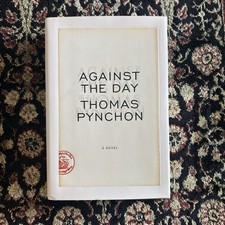

Slow Learner: Early Stories by Thomas Pynchon Stated First Edition PB 1984
🇺🇸 Price: US $23.99
Buy It Now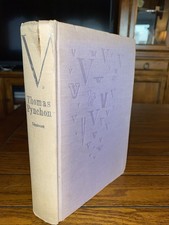
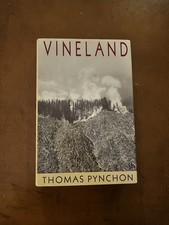
Vineland Thomas Pynchon 1990 First Edition Hardcover Little, Brown Novel
🇺🇸 Price: US $43.00
Buy It Now


Thomas Pynchon Mason & Dixon First Edition HC/DJ 1997 Mylar Protector
🇺🇸 Price: US $19.95
Buy It Now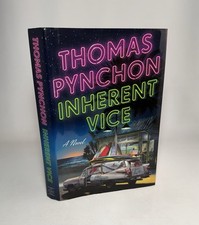

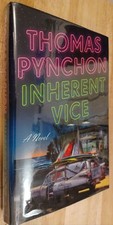


Thomas Pynchon / GRAVITY'S RAINBOW 1st Edition 1973 Viking Compass $4.95 PB
🇺🇸 Price: US $185.00
Buy It Now
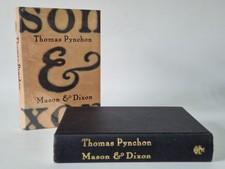

V. by Thomas Pynchon | 1st Edition, 1st Printing (1963) | Ex-Library
🇺🇸 Price: US $600.00
Buy It NowSigned By Author is an eBay affiliate. We may earn a commission from qualifying purchases.
About Thomas Pynchon
Thomas Pynchon (born 1937) remains one of the most enigmatic and influential figures in post-modern American literature. Known for his dazzling intellect, intricate plots, and deep scepticism towards systems of power, Pynchon has crafted a body of work that explores the intersections of technology, paranoia, and human desire. Born in Glen Cove, New York, he studied engineering physics at Cornell University before serving in the U.S. Navy, experiences that later informed his fascination with science and secrecy. His reclusive nature – he has famously avoided public appearances for decades – has only heightened his mystique, but his novels speak with extraordinary clarity about the modern condition.
His first novel, V. (1963), introduced readers to his dense, richly allusive style, weaving together stories of post-war disillusionment and global intrigue. This was followed by The Crying of Lot 49 (1966), a shorter, sharper satire that follows Oedipa Maas as she unravels a mysterious underground postal system – a brilliant metaphor for the search for meaning in a chaotic world. The novel’s cryptic humour and themes of conspiracy have made it a cultural touchstone and a classic introduction to Pynchon’s vision.
In 1973, Pynchon published his magnum opus, Gravity’s Rainbow, a monumental work set during the final months of World War II. Fusing science, politics, and the absurd, it examines the development of the V-2 rocket and the birth of the modern surveillance state. The novel won the National Book Award and is widely regarded as one of the greatest and most challenging works of twentieth-century fiction. Its vast cast, polymathic range and dark wit established Pynchon as a writer of unparalleled ambition and scope.
Subsequent novels continued his exploration of history and entropy. Vineland (1990) examined the lingering effects of the 1960s counterculture, while Mason & Dixon (1997) reimagined the Enlightenment through the adventures of two British surveyors mapping colonial America. Against the Day (2006) sprawled across the early twentieth century, and Inherent Vice (2009) offered a psychedelic noir set in 1970s Los Angeles, later adapted into a film by Paul Thomas Anderson. His novel Bleeding Edge (2013) returned to contemporary New York in the years leading up to 9/11, blending digital-age paranoia with tragicomedy.
In 2025, Pynchon made a startling return with a new novel titled Shadow Ticket, set in 1932 Milwaukee and centred around private detective Hicks McTaggart, who is drawn into an international cabal involving Nazis, Soviet agents, swing musicians and outlaw motor-cyclists. The book marks his first publication in over a decade and reinforces his continued fascination with genre-bending narratives, historical undercurrents and conspiratorial webs.
The filmic connection between Pynchon and Paul Thomas Anderson deepened considerably on the night of 15 March 2026, when One Battle After Another, Anderson’s bold and politically charged adaptation of Vineland, swept the 98th Academy Awards with six Oscars, including Best Picture, Best Director, and Best Adapted Screenplay. In his acceptance speech, Anderson explicitly acknowledged his debt to Pynchon, describing it as a huge debt of admiration. It is the most prominent moment of mainstream recognition the notoriously reclusive Pynchon has received in decades, and the effect on collector interest in Vineland first editions has been immediate and predictable.
Pynchon’s work defies easy categorisation, mixing slapstick and scholarship, pop-culture and physics, utopian longing and apocalyptic dread. His sentences pulse with linguistic play and historical resonance, demanding – and rewarding – the reader’s full attention. For collectors, signed first editions of his early novels are among the rarest and most valuable of modern literature, prized for their scarcity and their connection to an author who has remained both elusive and essential.
Thomas Pynchon illustration based on a photograph published by Albert Love Enterprises, a publisher based in Atlanta, Georgia. Photographer unknown; probably a work-for-hire employee of Albert Love Enterprises, possibly an employee of the US Navy., Public domain, via Wikimedia Commons.