

Signed first editions by Frank Herbert are not the sort of books that turn up in abundance, particularly when it comes to Dune. The 1965 first edition is, naturally, the great prize – the book in which Arrakis first appeared in print, and one which has become considerably more difficult to find with a genuine Herbert signature. Dune Messiah, published four years later in 1969, is another important early edition and an appealing choice for anyone building a run of the original sequence.
Herbert’s books have rarely been more visible. Villeneuve’s films have brought a new generation to the novels, and with Dune: Part Three, based on Dune Messiah, hitting cinemas in December 2026, that interest seems unlikely to disappear anytime soon. For the collector, signed copies offer something rather different from the endless stream of later printings: a direct link to the author and to the beginnings of one of science fiction’s most enduring worlds.


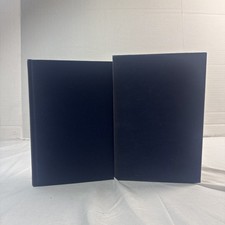
The White Plague By Frank Herbert Signed #337 Special First Edition LIKE NEW
🇺🇸 Price: US $499.99
Buy It Now
Frank Herbert / Chapter House: Dune / Signed First UK Edition / Gollancz 1985
🇺🇸 Price: US $1,375.00
Buy It Now
SIGNED AND INSCRIBED Heretics of Dune - First Edition HB - Frank Herbert - Dated
🇺🇸 Price: US $1,000.00
Buy It Now
Frank Herbert SIGNED The Jesus Incident 1979 First Edition Bill Ransom Double
🇺🇸 Price: US $1,999.97
Buy It Now
1985 Chapterhouse Dune SIGNED Ltd. First Edition - FRANK HERBERT - NEAR MINT
🇺🇸 Price: US $999.99
Buy It Now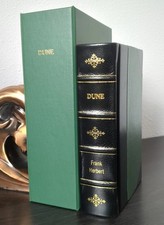
Signed! Dune by Frank Herbert 1st PB Edition Print 1965 Rebound Clamshell Case
🇺🇸 Price: US $5,000.00
Buy It Now
Dune Frank Herbert SIGNED Chilton First Edition 7th Print -- BEAUTIFUL
🇺🇸 Price: US $5,200.00
Buy It Now
FRANK HERBERT The White Plague SIGNED AUTOGRAPHED Slipcase 1st Ed 398/500 1982
🇺🇸 Price: US $499.95
Buy It Now
Frank Herbert / God Emperor of Dune Signed 1st Edition 1981 #2407410
🇺🇸 Price: US $950.00
Buy It Now
Chapter House Dune, Frank Herbert. Signed First UK Edition, 1st. (Chapterhouse)
🇺🇸 Price: US $1,200.00
Buy It Now

Dune by FRANK HERBERT ~ SIGNED First UK Edition 1965 ~ 1st Printing
🇺🇸 Price: US $15,000.00
Buy It Now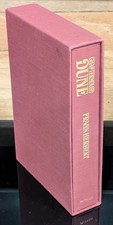
FRANK HERBERT Chapterhouse Dune SIGNED AUTOGRAPHED Slipcase 1st Ed # 56/750 1985
🇺🇸 Price: US $1,399.95
Buy It Now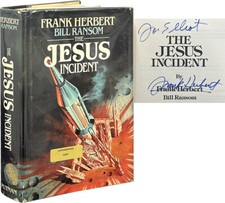
Frank Herbert, Ransom Bill / The Jesus Incident Signed 1st Edition 1979
🇺🇸 Price: US $575.00
Buy It Now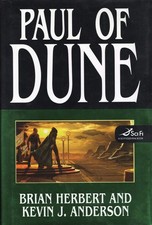
Signed Paul of Dune HC 1st Edition Brian Herbert Kevin J Anderson Dune
🇺🇸 Price: US $72.99
Buy It NowSigned By Author is an eBay affiliate. We may earn a commission from qualifying purchases.
About Frank Herbert
Frank Herbert was born in Tacoma, Washington, in 1920, but there was very little in his early career to suggest that he would eventually create one of the great landmarks of twentieth-century science fiction. For the best part of three decades he worked as a journalist, moving around the newspapers of the West Coast – the Seattle Star, Tacoma Times, Santa Rosa Press-Democrat and, eventually, the San Francisco Examiner among them. He attended the University of Washington but never bothered to finish his degree. Herbert was not especially tolerant of studying things that failed to interest him, which, in retrospect, may tell us something about the writer he was to become.
It was at the university in 1946 that he met Beverly Ann Stuart, another aspiring writer. They married the following year, and Beverly’s importance to Herbert’s career should not be underestimated. She edited his work, argued with him when necessary, acted as his sounding board and, for considerable stretches of their married life, earned the money that allowed him to keep writing. She worked as an advertising copywriter while Herbert pursued the rather less dependable business of becoming a novelist.
The origins of Dune are now part of publishing folklore. In the late 1950s, Herbert was commissioned by the U.S. Department of Agriculture to write a magazine article about efforts to stabilise the shifting sand dunes near Florence, Oregon. The article never materialised. The research did. Herbert became fascinated by dunes and erosion, by the ecology of hostile landscapes and by the sheer possibility of a civilisation shaped by an environment almost entirely made of sand. From that uncompleted piece of journalism came Arrakis.
Herbert worked on Dune for six years. The novel was serialised in Analog and then endured the sort of publishing history that might have discouraged a less stubborn writer: nearly twenty publishers turned it down. Eventually Chilton, a firm far better known for automobile repair manuals than science fiction, agreed to publish it in 1965. It was an unlikely home for an enormous, difficult novel about desert ecology, politics, religion and power. It turned out to be exactly the right gamble. Dune won both the Nebula and Hugo Awards and went on to become the foundation of what many readers regard as the finest achievement in science fiction and speculative fiction.
Herbert returned to Arrakis another five times. Dune Messiah followed in 1969, then Children of Dune (1976), God Emperor of Dune (1981), Heretics of Dune (1984) and Chapterhouse: Dune (1985). The later books are stranger, darker and considerably more ambitious than the first, but Herbert’s central concerns remained remarkably consistent: ecology, political power, religion, human survival and the uncomfortable consequences of hero worship. He was particularly interested in what happens when people place too much faith in a charismatic leader – hardly an unfashionable subject now, and perhaps one reason the books continue to feel so contemporary.
There was plenty of other work besides Dune. Herbert wrote close to thirty novels and collections, including The Dragon in the Sea, Destination: Void, The Santaroga Barrier and Whipping Star. He also remained connected to journalism into the 1970s before finally giving himself over to fiction full time. For a writer now so closely identified with one enormous fictional universe, it is easy to forget quite how broad his interests were.
His family life was complicated. Herbert had been married briefly before Beverly, to Flora Parkinson, with whom he had a daughter. He and Beverly had two sons, Brian and Bruce, and remained married until her death in 1984. That same year brought another curious chapter in the Dune story when David Lynch’s long-awaited film adaptation reached cinemas. The response in America was decidedly mixed, while audiences in Europe and Japan proved rather more receptive. Herbert married Theresa Shackleford in 1985, the year Chapterhouse: Dune, his final solo novel, appeared.
He died in Madison, Wisconsin, in February 1986, aged sixty-five, following complications from pancreatic cancer.
The interesting thing about Herbert’s reputation is that it has scarcely stopped growing. Dune has now passed through several generations of readers, and each seems to discover a slightly different book. Denis Villeneuve’s Dune (2021) and Dune: Part Two (2024) brought Herbert’s work to a huge new audience, followed by the HBO prequel series Dune: Prophecy. With Dune: Part Three, adapting Dune Messiah, due in cinemas in December 2026, the Herbert revival shows no particular sign of slowing down.
There are, of course, plenty of famous science fiction writers. Very few created a world that became this deeply embedded in the culture. Herbert did – and, remarkably, the world he invented still seems to have things to say to us.
Illustration of Frank Herbert based on a photograph by Unknown photographer, Public domain, via Wikimedia Commons.
.jpg)