Few names in children’s literature feel as solid and dependable as Carolyn Keene. For generations, she has been the guiding hand behind Nancy Drew’s sharp mind, steady nerve, and unmistakable confidence. Yet Carolyn Keene never existed. She was a literary façade, carefully constructed to conceal a far more complex and fascinating reality.
The Nancy Drew Mysteries were created in 1930 by the Stratemeyer Syndicate, a book-packaging empire founded by Edward Stratemeyer. The Syndicate specialised in producing series fiction at speed, using stable pseudonyms that could outlive any individual writer. “Carolyn Keene” was one such house name, owned outright by the Syndicate and later by its publishers. The goal was consistency, brand loyalty, and above all, control.
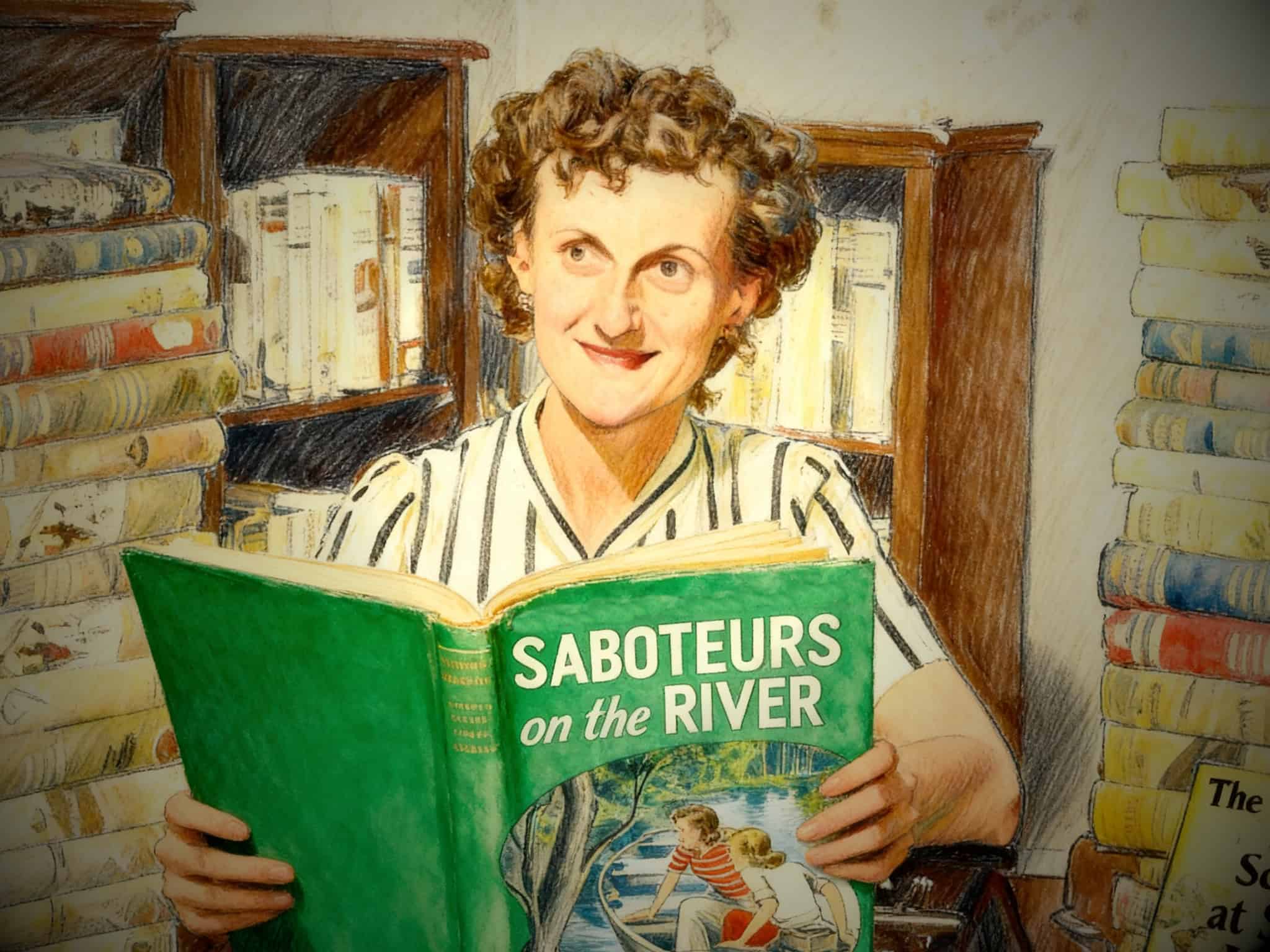
The first and most important of the real Nancy Drew authors was Mildred Wirt Benson. A trailblazing journalist and writer, Benson penned 23 of the original 30 Nancy Drew titles between 1930 and 1947. Her influence on the character cannot be overstated. Benson gave Nancy her independence, athleticism, and quiet authority. At a time when many fictional girls were passive or ornamental, Nancy drove her own car, challenged male authority, and solved crimes with intelligence rather than charm. Much of what readers still recognise as “classic” Nancy Drew is Benson’s voice.
Despite this, Benson was paid a flat fee, signed contracts that denied her authorship, and received no royalties. For decades, her role remained largely unknown to the public. The name Carolyn Keene appeared on every cover; the real writer disappeared behind it.
After Benson’s departure, other writers stepped in, each contributing to the long-running series while adhering to strict guidelines. Among them was Harriet Adams, Edward Stratemeyer’s daughter, who not only wrote several volumes herself but also revised earlier titles in the 1950s. These revisions softened Nancy’s personality, removed dated language, and streamlined plots to suit post-war sensibilities. As a result, the Nancy Drew of later editions can feel noticeably different from her earlier incarnation.
What makes the Carolyn Keene myth so enduring is how seamlessly it worked. Readers believed in a single authorial presence, while in reality Nancy Drew was shaped by multiple hands across decades. This collaborative anonymity was unusual, but it allowed the series to adapt, survive, and flourish well into the modern era.
For collectors, this hidden history adds an extra layer of intrigue. Early first editions from the 1930s, especially those written by Mildred Wirt Benson, are not just nostalgic artefacts; they represent the closest connection to Nancy Drew’s original voice. The dust jackets, text variations, and even subtle tonal differences tell a story that the Carolyn Keene name alone never could.
Carolyn Keene may be fictional, but the writers behind her were very real, often underpaid, and for a long time, uncredited. Unravelling their identities does not diminish the magic of Nancy Drew. If anything, it enriches it, revealing how one of literature’s most enduring heroines was quietly shaped by a woman whose own story was every bit as remarkable.