Nick Hornby signed first editions are a steady and increasingly attractive presence in the literary fiction collecting market. Fever Pitch, the 1992 memoir that made his name and won the William Hill Sports Book of the Year, and High Fidelity, his genre-defining 1995 debut novel, remain the two most sought-after titles, particularly in first printing with dust jackets intact. With two Academy Award nominations for his screenwriting and a readership that has stayed loyal across three decades, Hornby’s collectibility has real staying power. For anyone building a contemporary literary fiction collection, his early first editions are well worth serious attention.

VERY RARE *SIGNED* US EDITION Nick Hornby HIGH FIDELITY Paperback W/ Newspaper
🇺🇸 Price: US $150.00
Buy It Now
Nick Hornby - High Fidelity- First American Editon 1st 1995 HC with DJ
🇺🇸 Price: US $33.33
Buy It Now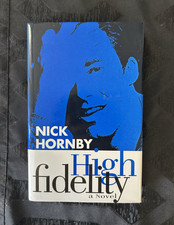
Signed By Author is an eBay affiliate. We may earn a commission from qualifying purchases.
← Back to full listingsAbout Nick Hornby
Nick Hornby was born in Redhill, Surrey, in 1957, the son of a businessman father whose own career was steady and conventional in a way his son’s would never quite be. He grew up in Maidenhead after his parents separated, went to the local grammar school, and read English at Jesus College, Cambridge. What followed was a fairly aimless decade by his own account, teaching for a while, drifting through freelance journalism, working odd jobs before anything resembling a writing career took shape.
That changed almost overnight in 1992. His first book was a slim essay collection on American fiction, but it was his second, Fever Pitch, that made his name. Ostensibly a memoir about supporting Arsenal, it was really about obsession, class, and the strange logic of male devotion, and it won the William Hill Sports Book of the Year. It also did something unusual for a football book: it got taken seriously as literature, and it opened the door for Hornby to spend the next three decades writing about ordinary lives with unusual precision.
High Fidelity followed in 1995, a novel about a record shop owner cataloguing his failed relationships in top five lists, and it remains one of the defining comic novels of the 1990s. About a Boy came in 1998, pairing a feckless bachelor with a lonely twelve year old in a story that turned out to have more heart than its premise suggested. Both were adapted into major films, with John Cusack and Hugh Grant respectively, and both adaptations only widened Hornby’s readership rather than replacing the books in anyone’s affections. High Fidelity later became a Broadway musical and then a television series, which says something about how durable that particular story has proven to be.
His fiction sits comfortably within literary fiction, but it rarely announces itself as such, favouring wit and emotional accuracy over showiness. How to Be Good, published in 2001, was longlisted for the Booker Prize and picked up the WH Smith Award for Fiction the following year. A Long Way Down, his 2005 novel about four strangers who meet on a rooftop each planning to jump, was shortlisted for the Whitbread Novel Award and later filmed with Pierce Brosnan. He also wrote Slam, a young adult novel, and Juliet, Naked, which found its way to the screen in 2018.
Hornby’s other life, as a screenwriter, has brought him two Academy Award nominations for Best Adapted Screenplay, for An Education in 2009 and Brooklyn in 2015, alongside his work adapting Cheryl Strayed’s Wild. He was elected a Fellow of the Royal Society of Literature in 1996 and received the E. M. Forster Award from the American Academy of Arts and Letters in 1999. His nonfiction, particularly the long-running ‘Stuff I’ve Been Reading’ columns collected across several volumes, has built him a devoted following among readers who enjoy watching a genuinely enthusiastic reader think out loud about books.
More recently, Dickens and Prince, a short and characteristically playful study of the unlikely similarities between the Victorian novelist and the American musician, showed he has lost none of his appetite for finding connections in unexpected places. Now in his late sixties, Hornby remains one of the most consistently readable chroniclers of contemporary British life, an author whose books have aged remarkably well precisely because they were never trying to be anything grander than honest.
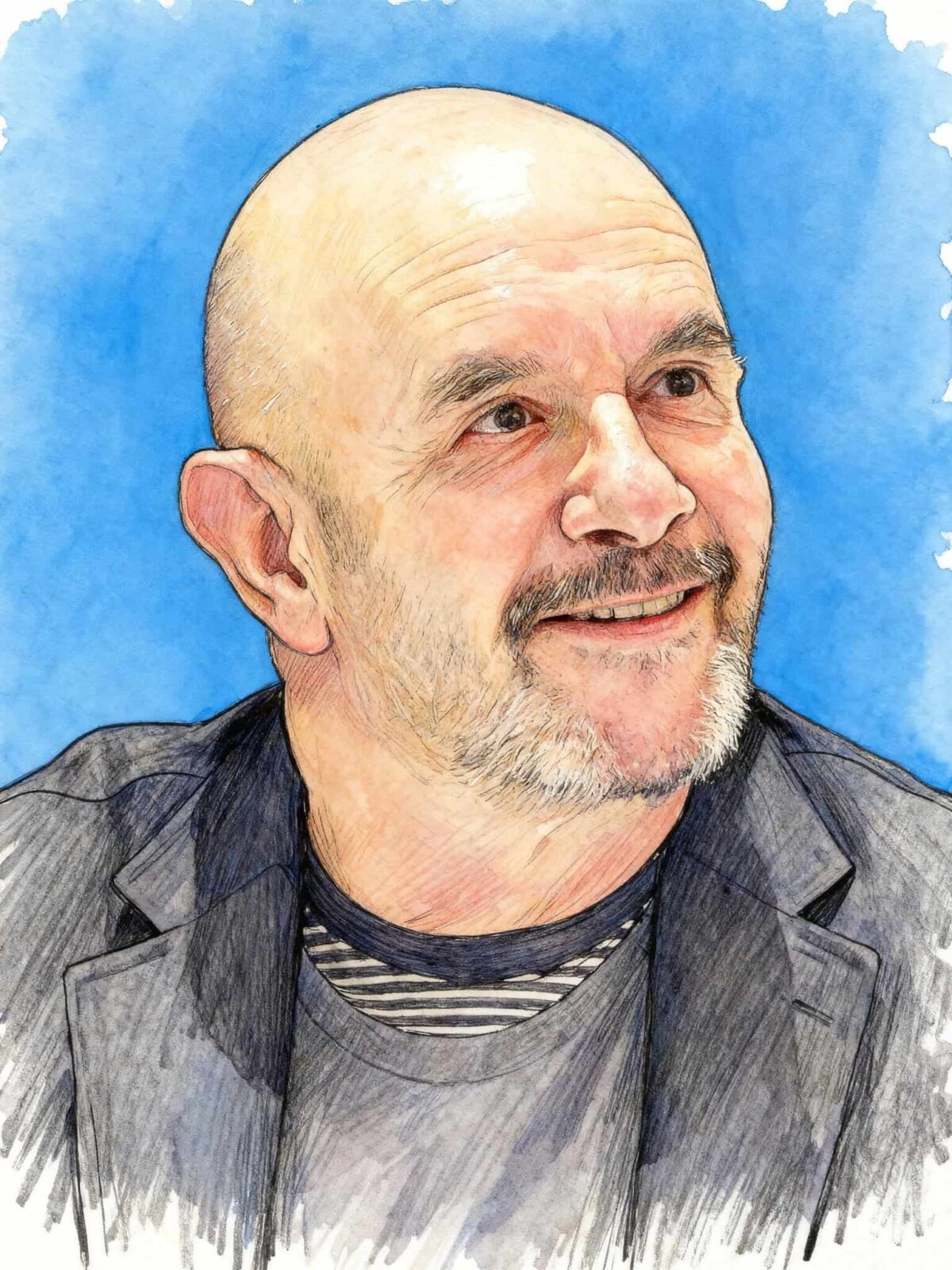
Illustration of Nick Hornby based on a photograph by Udoweier, CC BY 4.0, via Wikimedia Commons.
