In anticipation of Margaret Atwood’s forthcoming memoir Book of Lives, we’re revisiting ten of her finest novels – works that have defined her extraordinary career and shaped contemporary literature. Atwood’s fiction has long explored the tensions between power and vulnerability, nature and technology, memory and myth. Whether in speculative dystopias or intimate psychological portraits, her novels combine intellect with humanity, moral seriousness with mischievous humour. The following selection celebrates the range and brilliance of Atwood’s storytelling, from early feminist classics to later masterpieces of imagination and satire. Each title reveals a different facet of her vision – and together, they illuminate one of the most original voices in modern fiction.
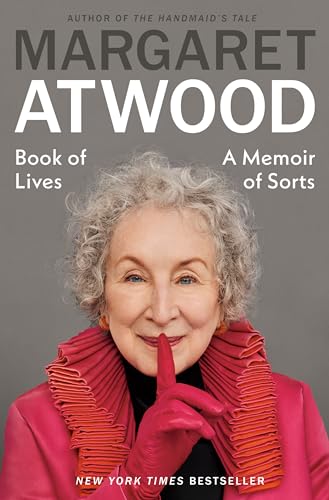
How does one of the greatest storytellers of our time write her own life? The long-awaited memoir from the author of The Handmaid’s Tale and The Testaments, one of our most lauded and influential cultural figures.

1. The Handmaid’s Tale (1985)
Atwood’s most iconic work, The Handmaid’s Tale depicts the Republic of Gilead—a totalitarian regime that strips women of autonomy in the name of religious purity. Narrated by Offred, a “handmaid” forced into reproductive servitude, the novel is both a chilling dystopia and a razor-sharp critique of patriarchy, language, and control. Written in spare, poetic prose, it examines how power reshapes identity and memory. Its continuing relevance, amplified by television adaptations and social debate, confirms Atwood’s prophetic insight into freedom and repression. A cornerstone of feminist literature and one of the most haunting novels of the twentieth century.

2. Alias Grace (1996)
Based on a true nineteenth-century Canadian murder case, Alias Grace reconstructs the life of Grace Marks, a servant accused of killing her employer and his housekeeper. Through shifting voices and psychological tension, Atwood probes questions of guilt, class, and the elusive nature of truth. The novel blends historical realism with gothic atmosphere, creating a narrative that is as much about storytelling itself as about crime. Richly detailed and meticulously researched, it challenges readers to consider how society judges women and remembers its own history. Alias Grace is a triumph of empathy, ambiguity, and narrative craftsmanship.

3. Cat’s Eye (1988)
In Cat’s Eye, Atwood turns her sharp gaze inward to explore the cruelties and complexities of female friendship. The story follows Elaine Risley, a painter returning to Toronto for a retrospective of her work, as she revisits her childhood memories of bullying, alienation, and artistic awakening. Through Elaine’s fragmented recollections, Atwood captures the painful nuances of memory and identity. The novel is both a portrait of the artist as a woman and a meditation on how the past shapes creative vision. Cat’s Eye is among Atwood’s most emotionally resonant and autobiographical works, suffused with irony and melancholy.

4. The Blind Assassin (2000)
Winner of the Booker Prize, The Blind Assassin is an intricate tale of memory and storytelling. It follows Iris Chase, an elderly woman recalling her glamorous yet tragic family history, intertwined with a science-fiction novel supposedly written by her sister. Layers of narrative—within novels, letters, and newspaper clippings—create a tapestry of secrets, betrayals, and love. Atwood’s structural daring and lyrical prose transform this into both a family saga and a meditation on authorship and deception. The result is a dazzlingly complex novel that rewards close reading and remains one of her greatest achievements in narrative architecture.

5. The Robber Bride (1993)
Inspired by a Grimm fairy tale, The Robber Bride examines friendship, betrayal, and female rivalry through the intertwined lives of three women—Roz, Charis, and Tony—who are haunted by the manipulative and destructive Zenia. Atwood uses wit and dark humour to dissect the psychology of deceit and the shifting roles of women in late twentieth-century society. The novel’s realism is laced with myth, producing a modern fable of power and survival. The Robber Bride captures Atwood’s fascination with duplicity and the masks people wear, all delivered in her signature blend of empathy and sharp social observation.

6. Oryx and Crake (2003)
The first in the MaddAddam trilogy, Oryx and Crake envisions a near-future world devastated by genetic engineering and corporate greed. Narrated by Snowman, the apparent last human, it recounts his friendship with the brilliant but amoral Crake and the enigmatic Oryx, whose lives intertwine in a vision of apocalypse. Atwood’s speculative realism explores bioethics, love, and extinction with both satire and sorrow. It’s a warning and a lament—an exploration of what makes us human and what happens when we play god. Startling, inventive, and eerily plausible, it remains one of her most ambitious works.

7. The Testaments (2019)
Returning to Gilead more than three decades after The Handmaid’s Tale, Atwood delivers a gripping sequel that expands her dystopian universe through three intertwining voices: Aunt Lydia, a cynical enforcer of the regime; Agnes, a privileged Gileadean girl; and Daisy, a young woman raised in freedom. The Testaments explores complicity, rebellion, and redemption with pace and insight, offering both closure and renewal. It shared the Booker Prize and reignited debate about totalitarianism and resistance. Atwood balances suspense with moral inquiry, proving that her dystopian imagination remains as incisive as ever.

8. The Year of the Flood (2009)
The second book in the MaddAddam trilogy, The Year of the Flood runs parallel to Oryx and Crake, following survivors of a biotech catastrophe. Through the voices of Toby and Ren—members of an eco-religious sect called God’s Gardeners—Atwood deepens her exploration of faith, ecology, and endurance. The novel fuses spiritual satire with post-apocalyptic adventure, creating a world where ritual and science collide. It is compassionate yet unsentimental, tragic yet funny. The Year of the Flood reaffirms Atwood’s power to blend imagination with political and environmental urgency.

9. The Edible Woman (1969)
Atwood’s debut novel introduced many of the themes that would define her career. The Edible Woman follows Marian, a young market researcher who develops an aversion to food as she becomes increasingly aware of the social and emotional constraints placed upon her. Both witty and unsettling, the novel anticipates second-wave feminism while remaining a sharp, satirical study of consumer culture and self-alienation. Its surreal metaphors and psychological acuity make it a remarkable first work—proof that Atwood’s vision of gender and identity was fully formed from the start.

10. Surfacing (1972)
Surfacing is a haunting early novel that helped define Atwood’s voice and themes. A woman returns to rural Quebec in search of her missing father, but the journey becomes a descent into memory, myth, and the wilderness of the self. Written in hypnotic, symbolic prose, the novel examines nature, colonialism, and psychological disintegration. It is both an ecological fable and an exploration of identity stripped bare. Surfacing laid the groundwork for Atwood’s later explorations of feminism and environmentalism, establishing her as a writer deeply attuned to both the inner and outer worlds of human experience.
Collecting Margaret Atwood: Signed First Editions
As anticipation builds for Book of Lives, now is the perfect time to explore Atwood’s remarkable body of work through collectible first editions. Signed copies of her novels – from The Handmaid’s Tale and Alias Grace to Oryx and Crake – are increasingly sought after by readers and investors alike. Each signature marks a moment in literary history, capturing the creative evolution of one of the world’s most visionary writers. Browse our curated selection of signed first editions by Margaret Atwood to discover rare finds and lasting additions to your collection.
All cover images courtesy of individual publishers. Displayed for reference and promotional purposes (fair use).